


[ad_1]
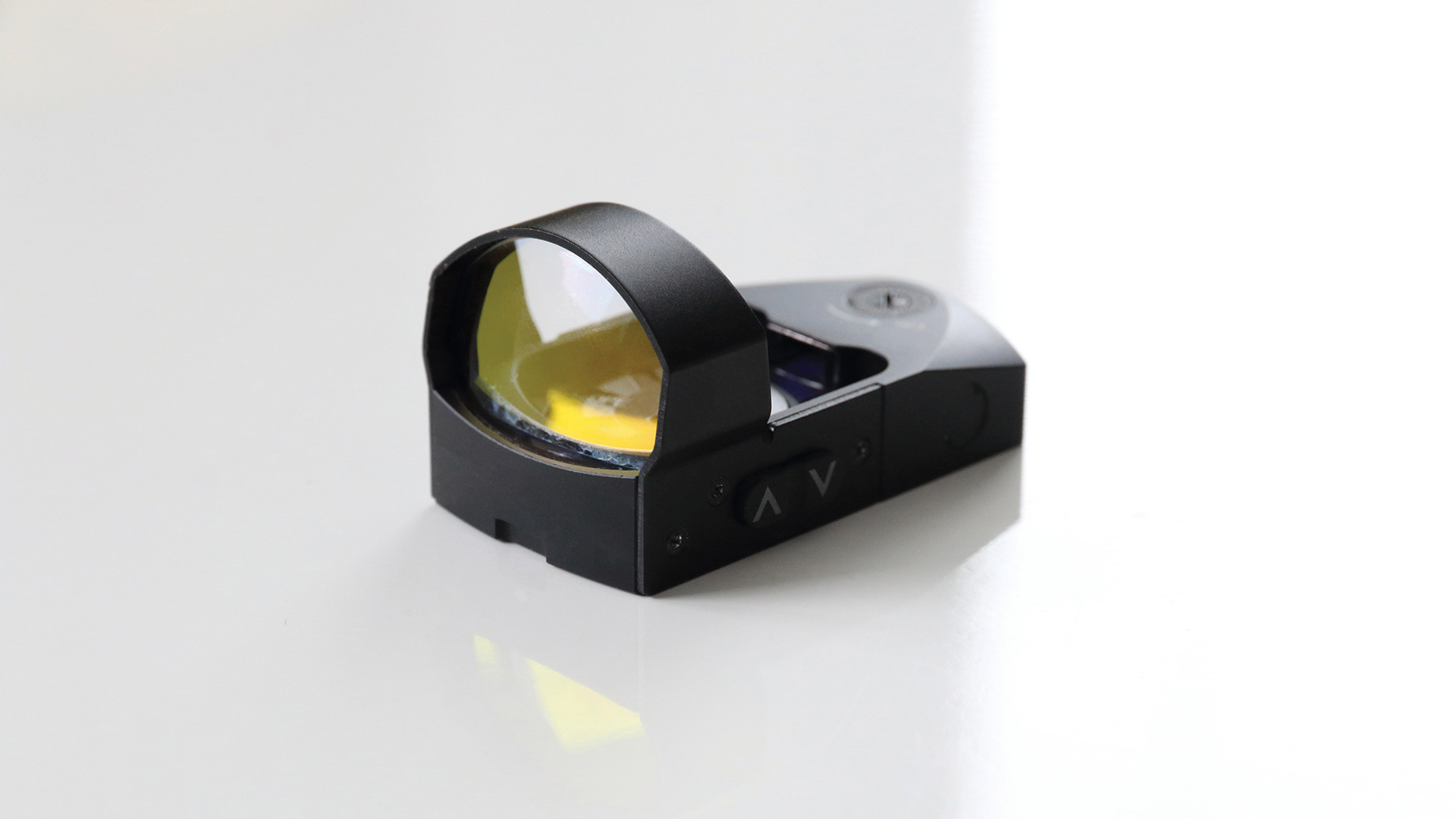
When it comes to pistol sighting systems, there have been many innovations over the last several decades. First, there was the introduction of night sights including tritium tubes that gave off a green glow in darkness. Then came high-visibility sights that incorporated pieces of fluorescent fiber optics, which absorbed light, emitting a glow in light and low-light situations. There have been some modifications to night sights, which mainly consist of adding bright colors around the tritium tube to better draw the shooter’s eye during situations in which there is ample light. Now, the newest innovation is the miniaturized red dot sight (MRDS).
The full-sized sights have been used on long guns for years and have been widely accepted by the law enforcement community. However, miniaturized versions for handguns seem to have come under a great deal of scrutiny. Reputable manufacturers such as Trijicon, Holosun, Aimpoint and Leupold are making these sights. Virtually every agency has some other sighting system made by those manufacturers in use. Why the scrutiny over the MRDS? The simple answer is that the law enforcement community is very skeptical of change. Even when confronted with the inevitability of change, we are one of the slowest industries to truly embrace it. All too often, we hear the phrase “Why change now? This is the way we’ve always done it.”
Let’s identify some advantages the MRDS presents users with, as opposed to a traditional sighting system. The most glaring advantage is the ability to stay threat-focused. While using traditional iron sights, the shooter must focus on the threat, then the front sight, then the rear sight, then maintain focus on the front sight while the threat is blurry. This means the shooter has all their focus on the front sight of their firearm. The threat, which is the reason they are deploying their firearm, is blurry to them. Firearms instructors all around the country have been saying “Front sight, squeeze” for decades while the threat or object the shooter is firing at is blurry and out of focus. When using an MRDS, the shooter can focus on the threat, simply see the “dot” superimposed on the threat and squeeze the trigger. This allows the shooter to stay completely focused on the threat. This is an extremely big deal. It means that the threat stays in focus. The shooter will see more of the threat and see the threat more clearly. This allows not only more information, but also more accurate information to be processed by the shooter, potentially greatly reducing the risk of being involved in a “mistake of fact shooting.” When the threat is blurry, a cellphone could possibly look like a firearm or other weapon; however, when the threat is crisp, clear and in focus, so are their hands and any object in them.
A second advantage of the MRDS is the simplicity of use. The shooter simply puts the dot where they want the projectile to impact. The dot is completely independent of any other sighting system, regardless of the ability to co-witness. It will not magically make the user a better shooter. However, it will eliminate some issues, such as looking over traditional iron sights.
Many agency administrators are aware of the advantages of an MRDS but remain hesitant because they are not sure how to construct a policy governing its use. The question those administrators need to ask themselves is “Do I have a policy governing the use of night sights, fiber-optic sights, aperture sights or any other type of sights?” The answer is most popularly going to be “No.” So why construct a policy for this type of sight? The second obstacle someone may have to overcome with agency administrators is the question “What if the window becomes obstructed by fog, rain, snow, or mud?” The answer is simple. When using a MRDS, your brain will simply take over. You will see the dot with one eye and the threat with the other. Your eyes will work together to place the dot on the threat. This is called occluded eye shooting.
If you have decided an MRDS may be for you, there are several different offerings from a multitude of companies. Make sure you explore all of them, do your research and have definitive answers to the choices you are going to make. Some of these choices include if you are going to opt for a modular system and could swap optics through the use of a plate on the slide of your weapon, or if you are going to have your slide milled for a specific optic. There are advantages and disadvantages to both. By having your slide milled for a specific optic, you gain strength, durability and simplicity; however, you use the ability to mount other types of optics to that slide. You will also have to consider the brand of optic. There is a great deal of give and take with the myriad of offerings out there right now. The things to consider are battery life, emitter type (open or enclosed) and singular or dual emitter. For a law enforcement officer, durability and battery life should take priority.
Once you have selected your MRDS, make sure you get some quality formal training. There are several phenomenal trainers out there who have been teaching MRDS shooting for years. After you take your classes, continue to get your reps in. The key is finding the dot. The key to finding the dot is repetition. Remember, small, precise muscle movements are often difficult to duplicate in training and nearly impossible to duplicate under stress. Make your adjustments with the largest muscle groups possible during draw and presentation. Start with your shoulders and elbows, and try not to make the small adjustments with your wrists. While conducting training and practice, the dot will become easier to find faster than you could ever find your front sight. Once “finding the dot” becomes automatic, you will become noticeably faster from the draw and during target transitions. Precision shots at distance will also become easier due to the ability to stay threat-focused.

Dan Kickert and Lauren Sheehan
[ad_2]
