


[ad_1]
Opinion/Editorial
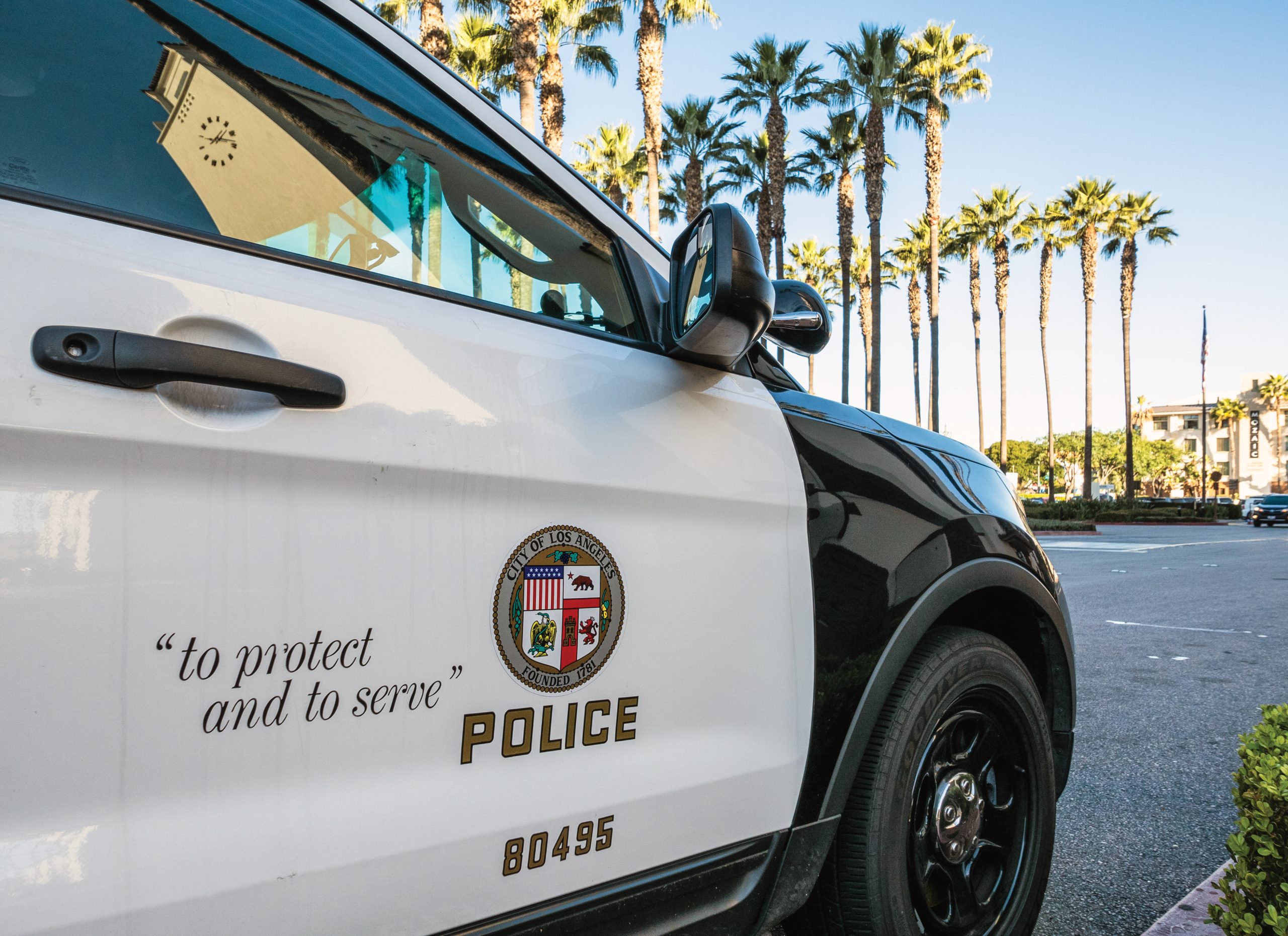
To serve and protect.”
“On my honor, I will never betray my badge, my character or the public trust.”
Oaths, mission statements and core values are common tools in agency inventories. They’re splattered onto patrol cars, pasted onto building walls and touted at formal ceremonies. They make an agency sound professional. Sometimes they even look really cool (depending on the font you use). But do they really matter? There is often a glaring disconnect between lofty ideals and the realities of daily law enforcement activities. Cops see the worst. “I will always maintain the highest ethical standards and uphold the values of my community and the agency I serve” sounds noble in a badge-pinning ceremony, but the Boy-Scout-esque sentiment may seem out of place on a street laden with poverty, prostitution and the worst that a city has to offer. Phrases that echo loftily in community speeches often ring hollow in the mean streets where officers are asked to carry them out. It’s easy to see why touchy-feely concepts such as honor and integrity are often relegated to a phrase on the side of a car. Despite this reality, a dedication to ideals is more necessary now than ever.
In January of 1968, during the Vietnam War, U.S. Army soldiers from various units participated in an offensive that would (sadly) come to be known as the My Lai massacre. What started out as a sweep to clear enemy soldiers from villages where they were hiding devolved into chaos. Men, women and children were rounded up and executed. Some women were allegedly raped. It would be years before anyone was held accountable. The soldier to receive the most direct punishment for his involvement was a young lieutenant named William Calley. In a speech decades later, Calley maintained that he was essentially just following orders.
Modern law enforcement is chock-full of “orders.” Officers certainly receive the kind of verbal orders Calley referred to, but those constitute a small part of the whole. In addition to whatever the shift supervisor says, officers are governed by myriad department policies, legal guidelines and statutes. These things are often described as an umbrella that will protect our young guardians from discipline and liability if they’ll only stay under the shelter of the policy manual’s loving embrace. Sadly, “orders,” written or verbal, can’t always cover every single situation and they aren’t always right. It’s tempting for a young officer to believe the lie that everything will be OK if they only do what they’re told, but history (past and recent) shows this isn’t true.
Policies and procedures aren’t bad things. They’re essential, in fact. Equally necessary are good, quality leaders who can issue guidance and direction on specific situations. But these things alone will never adequately inform the decisions an officer makes on a day-to-day basis. The culture of an agency must contain an underlying commitment to honor, an innate desire to do the right thing. As heinous as the details of My Lai may be, there were shining spots of hope-for-humanity mixed in as well. Flying recon in a small observation helicopter over the village, Warrant Officer Hugh Thompson noticed the large number of bodies (including women and children) scattered on the ground. He watched as a soldier walked over to a wounded woman and finished her off. Landing the chopper, he found and confronted Lieutenant Calley, who was engaged in some sketchy behavior. After Calley ordered him to mind his own business, Thompson returned to his chopper and took to the sky. He and his crew would eventually spot some fleeing civilians and protect them as they were shuttled to safety by fellow helicopter crews. At one point, Thompson ordered his own crew to shoot the massacring members of the infantry platoons if they tried to further attack the civilians. Thompson’s achievement in the incident wasn’t limited to facing down a well-armed crowd like John Wayne from the sky, though. He returned to base and angrily reported the incident to his chain of command. This eventually resulted in orders to cease the operation. Thompson would go on to testify against his fellow soldiers, which no doubt made him an outcast for the rest of his career. It’s a profile in moral courage that is sadly rare.
Orders, be they written or verbal, can’t ever take the place of conscience. If they could, we’d simply employ mindless robots to police our streets. A policy manual can never cover every contingency, nor can a supervisor ever be infallible. Officers must have an underlying base of honorable intention and dedication to a moral code. Any external action, devoid of true devotion to a cause, is doomed to failure. It’s destined to become as hopeless as the crime-ridden street that an officer polices against all odds every time he suits up. Without a righteous moral underpinning, any enterprise is likely to fail.
Lofty concepts like honor, commitment and integrity can’t be relegated to a statement on the department webpage. An oath is the difference between a job and a calling, a means of income and a way of life. Agency leadership needs to make clear that the department is serious about these issues. That commitment needs to be demonstrated, not just verbalized. If oaths (and the concepts therein) are something that just get written on a wall, they are indeed useless. But if they’re truly a creed that officers and agencies embrace, they just might be the most important part of the law enforcement profession.

Cliff Couch
[ad_2]
