
[ad_1]
Sixth Amendment
Unanimous jury requirement applies to older criminal cases, top state court rules
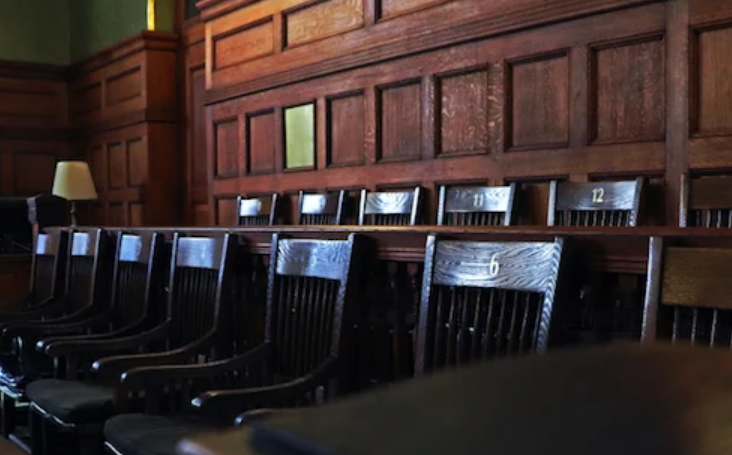
Image from Shutterstock.
The Oregon Supreme Court recently ruled that the constitutional requirement for unanimous juries in serious criminal cases applies to older verdicts challenged in state post-conviction proceedings.
The state supreme court ruled Dec. 30 in the case of Jacob Keith Watkins, whose rape and sex-crimes conviction by a nonunanimous jury was final before the U.S. Supreme Court found a Sixth Amendment right to unanimous juries in Ramos v. Louisiana in April 2020, the Oregonian reports.
The next year, the Supreme Court ruled in Edwards v. Vannoy that the right doesn’t apply retroactively to overturn final convictions on federal collateral review, but states could decide otherwise.
Oregon was the last state to permit nonunanimous verdicts; they were allowed in felony cases but not first-degree murder cases. Louisiana allowed nonunanimous juries in all but death penalty cases until 2018.
The Oregon Supreme Court said a nonunanimous jury verdict renders a conviction void under state law because the constitutional violation is of such magnitude that it constitutes a substantial denial of a constitutional right.
The state supreme court noted that unanimous juries help ensure that a verdict is based on evidence and not racial or other prejudices. The concern about unfairness is not theoretical, the Oregon Supreme Court said.
Oregon’s adoption of the 1934 constitutional amendment permitting nonunanimous juries can be traced to the rise of the Ku Klux Klan and efforts to dilute the influence of racial, ethnic and religious minorities on juries.
The state supreme court said it was compelled to reach its decision, even as it acknowledged that it “will likely lead to the reexamination of many judgments that became final years or decades ago.”
The case is Watkins v. Ackley.
Press releases on the decision are here and here. Oregon Public Broadcasting also has coverage.
Aliza Kaplan, a professor at the Lewis & Clark Law School, told the Oregonian that 300 people, most of whom are in state prison, have sought to overturn their final convictions because of nonunanimous jury verdicts. Many people don’t know whether the jury that convicted them was unanimous, however, because the jury was not polled.
[ad_2]