
[ad_1]
The GOP in Florida has introduced and passed a series of legislation including the ‘Don’t Say Gay’ Bill and the ‘Stop WOKE’ Act attacking all education that teaches the existence and equality of people that aren’t white, male, or cishet*. Ron DeSantis, the governor of Florida, has a history of advancing racist and exclusive rhetoric. For example, during his 2018 gubernatorial race against Andrew Gillum, Florida’s first ever African-American nominee for governor, DeSantis made a comment that Florida should not “monkey this up” by electing Gillum.
*cishet – stands for cisgender and heterosexual and describes someone who is not a member of the Queer community

Push Back Against Critical Race Theory (CRT)
It is no secret that the current pedagogy taught in most American K-12 schools produces discrimination in the long run. Critical race theory introduces a perspective that includes the voices of people of certain groups excluded in most current educational settings. It presents as its starting point the assumption that race is a social construct and that racism is systemic, not just an individual prejudice, and thus always has been a part of American society. Originating in legal scholarship of the 1970s and 1980s, scholars of critical race theory sought to connect societal issues with systems of oppression in a more holistic, logical, and comprehensive manner and to shed light on the intersectionality between the values ingrained in the American government, societal perspectives, and resulting policy consequences. Critical race theory is a type of philosophy of education that aims at identifying the underlying values of governmental and societal actions through the views of underrepresented communities. Critical race theory equips students to tackle challenging issues like the legacy of slavery and systemic racism by broadening the scope of their awareness and beginning discussions that aim to promote the dismantling of structural inequality.
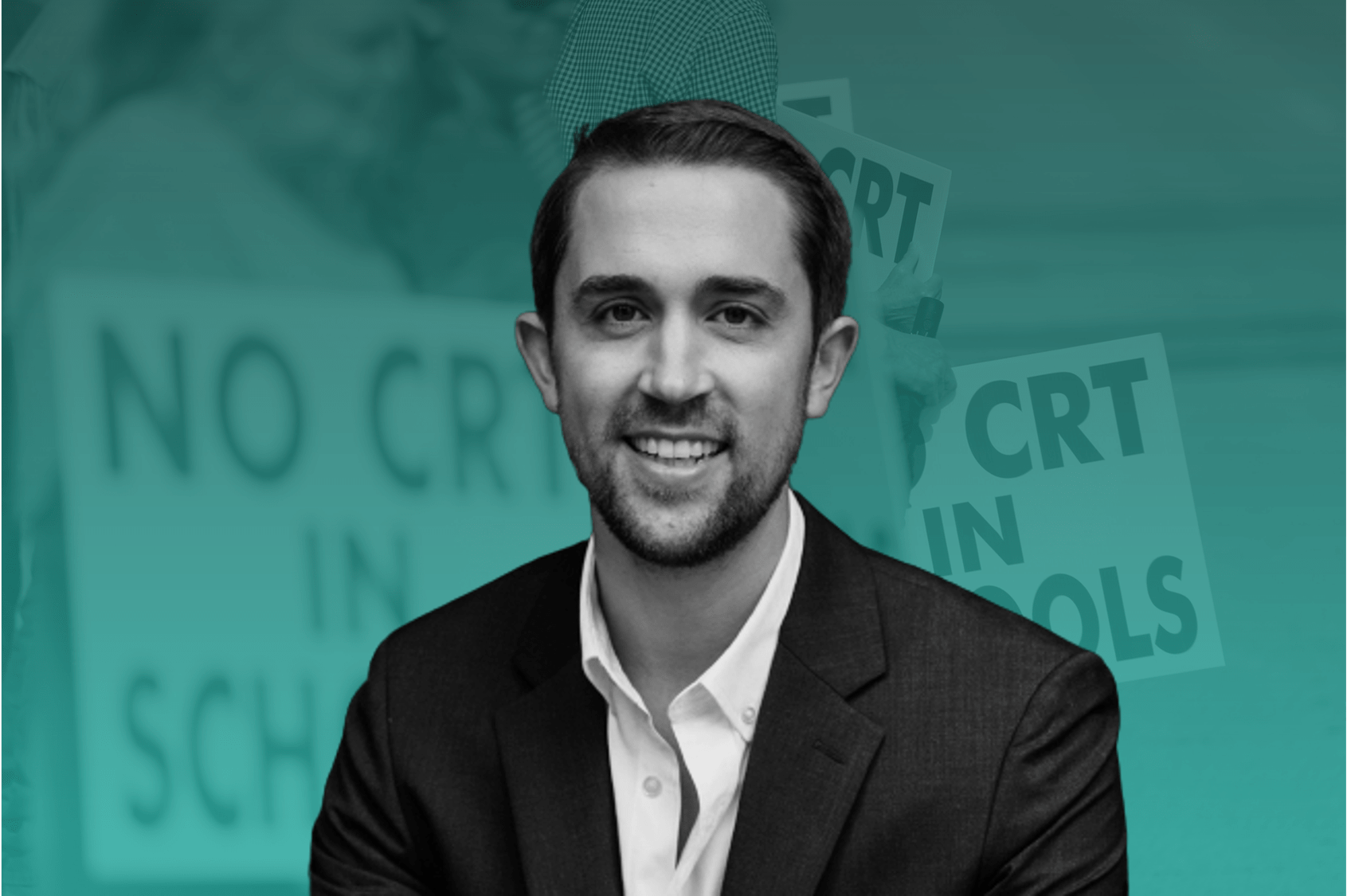
It is relevant to add that CRT is not a part of any current K-12 curriculum. The outcry around its inclusion was invented and fueled by the efforts of Christopher Rufo, a conservative activist. As a member of the Heritage Foundation, Rufo hoped to mobilize conservatives in America behind a common cause – Critical Race Theory in schools. His diligence in cultivating fear and anger surrounding teaching CRT in K-12 schools led to President Trump announcing an Executive Order banning diversity training for federal employees in September 2020. Observing widespread engagement from voters on this topic, President Trump and many prominent figures in right-wing media immediately began to echo the messages of fear and lines of attack on CRT across the media, guided by the outline provided to them by Rufo throughout interviews in the months prior.
The GOP, also known as the Grand Old Party, found its origin in opposing legislation allowing for the extension of slavery into America’s newly founded territories during the mid-nineteenth century. Thinking critically, one could consider how the actions of the Republican Party’s founding members serve as an attempt to combat policies perpetuating systemic racism and how this conduct aligns with the theme of CRT teachings. However, with gradual shifts in the political landscape, the GOP has moved away from these founding principles. Almost two centuries later, members of this same party appear threatened by the very notion that the American government has a continued role in preserving systemic racism, as is discussed in CRT.
The main arguments for banning CRT assert that integrating this pedagogy will cause students to feel guilty about the actions of past members of their race. They claim that it will teach students to hate each other based on the tensions between historical people of their races. This leaves me with many questions.
Are people of color not already being made to feel inferior because of their race through the current pedagogy? In the context of European colonization, which was heavily racially motivated and a huge facet of world history, what effects will result from banning a curriculum that teaches the racial motivations behind it? Which race does our current pedagogy continually stand by and justify the actions of? Which students are the GOP trying to ‘protect’ here? People of color are made aware of their race from a very young age, so banning this curriculum will only serve to further confuse them about the historical contexts through which they experience race. Do they actually believe that banning a curriculum about the history of race relations will improve current race relations, or is this only the goal that they say out loud? Should we take their worries seriously?
I don’t know about you, but I do not feel guilty about the actions of people that are not me. I hate that slavery happened. I hate that I, as a white person, still benefit from the systems put in place by past members of my race. Learning about these systems did not make me feel personally guilty for them. It made me feel a personal responsibility to fix them. To any white person capable of empathy (cognitive or emotional), learning about CRT will motivate and equip them to use their positions of privilege to abolish the systems that disadvantage their peers. More importantly, to any person of color, learning about CRT will not only validate their lived experiences in America but also help them contextualize why life has presented more obstacles for them in comparison to their white counterparts. It will equip them to tap into the power that they would otherwise not be able to access.
The Ban on AP African American Studies Classes
The Advanced Placement (AP) African American Studies course was developed by the AP Central College Board to be taught in schools across the country. The course is explicitly anchored in primary sources to avoid politicization of topics and to base all teachings on facts. The Smithsonian even partnered with the College Board to create a Learning Lab that tracks alongside the course and presents physical anthropological evidence to back up the claims made in the curriculum. The course is meant to cover a 28-week school year and is broken into four units: Origins of the African Diaspora; Freedom, Enslavement, and Resistance; The Practice of Freedom; and Movements and Debates. It runs chronologically, focusing on African people brought to America in slavery, their descendants, and the evolution of the Black and African American community throughout the years. The creators of this learning resource believe that this study plan will provide students with a baseline level of proficiency in history to understand modern race relations better. The course framework presented by the College Board can be found here.
Soon after the announcement of this newly developed program, The Office of Articulation, a division within the Florida Department of Education tasked with ensuring students’ educational progression, sent a letter to the College Board claiming that the course runs “inexplicably contrary to Florida law and significantly lacks educational value.” They say that they will be happy to reopen the conversation when they are presented with “lawful, historically accurate content.” Interesting. They deny this curriculum on the grounds of an act passed in 2022 called the Individual Freedom Act, more commonly known as the Stop WOKE Act.
Stop WOKE Act

The word ‘woke’ has been made into a buzzword that signifies an array of concepts including nuanced takes on gender, sexuality, and race. Think Tucker Carlson vs. “woke” M&Ms. The Stop WOKE Act was signed into law in 2022. WOKE, per this act, stands for “Wrong to our Kids and Employees.” It bans school curriculum and job training based on eight criteria.
The very first criterion of this act prohibits any curriculum that teaches that “members of one race, color, sex, or national origin are morally superior to members of another race, color, sex, or national origin.” I want you, the reader, to ask yourself how much of the curriculum from your history books taught you that White people had moral high ground or authority over members of other races. Were Native people “primitive savages” who didn’t know right from wrong? Did they not ‘officially’ own the land they lived on and therefore European settlers did not technically steal anything from them? Were Japanese internment camps during World War II “not that bad” because at least they weren’t Nazi internment camps? Were enslaved people uneducated and illiterate? Did Black Lives Matter protestors destroy small businesses during the ‘vicious rioting’ in 2020? How much of your very own history textbook would have to be banned if this law had been enforced during your K-12 career? Is it really the African American Studies classes that are making people feel bad on the basis of their race, color, sex, or national origin? In the meantime, a court blocked parts of the Stop WOKE act.
Pieces of legislation like the ones presented in this blog are very disheartening with devastating effects on the lives of the children, students, and teachers who have the misfortune of being at the epicenter of political sparring. We don’t know yet the final outcomes or if there will be more of this (probably). Only a couple of weeks ago, allies of DeSantis in the legislator filed House Bill 99, which would not only prohibit Florida’s institutions of higher education from offering things like gender studies minors and courses in CRT, but would also restrict activities that focuses on equity, diversity, and inclusion, making activities like many campus events as well as student organizations like Black student unions impermissible and threatening fundamental rights like the freedom of speech. Further, the bill states that general education core classes cannot present American history in a way “contrary to the creation of a new nation based on universal principles stated in the Declaration of Independence,” which could create limits on teaching topics like slavery and genocide on Native Americans. This has the potential to not only shift narratives back to purely Euro-centric perspectives, but gives the government undue influence over curricula and limits academic freedom. Most likely, the bill, if it will pass, will be blocked by a court, but the political ideologies fueling these bills will probably remain.
[ad_2]