


[ad_1]
The headlines
California bill would ban police dogs from arrests, crowd control; cites racial bias, trauma
Albuquerque Police Department works to limit ‘use of force’ during arrests
Senators aim to revive police reform talks but face major hurdles
Minneapolis policing to get overhaul
Police organizations playing politics
The narrative
In my June 2021 American Police Beat article entitled “Crowd control force options: a cacophony of mixed messages,” I expressed concerns about the groundswell of controversy surrounding the limits being placed on officers when addressing crowds and riots. Since that time, I have seen that same opposition expanding into everyday law enforcement activity. In short, every type of force option is now under scrutiny and in danger of being restricted and/or banned. Some of these limits have already been put into effect, and others are being considered. As we continue to watch this degradation play out across the country, we must ask the critical question: What type of force options will be available if all force options are banned? In essence, there will be no force option.
Between the lines
The movement to undermine the efforts of law enforcement is troubling, to say the least. One by one, police officers are being stripped of the very means necessary to respond to lawless opposition. The result is fewer options and a retrograde approach to dealing with resistance. Here are just a few examples:
Lateral Vascular Neck Restraint (LVNR): In 2020, following the death of George Floyd, police activists and politicians went on an all-out mission to ban the use of LVNR. This was despite the fact that LVNR was not even utilized during the Floyd arrest. Nonetheless, the zealots seized the moment and convinced many departments, political bodies and even law enforcement leadership organizations that LVNR should be the “sacrificial offering” to appease the detractors. As a result, law enforcement agencies across the country have either banned or severely restricted the use of LVNR in arrest situations.
But there are myths associated with LVNR. To be clear: LVNR is not, nor has it ever been, a “chokehold.” When it is properly applied, the arm does not constrict the airway. As Dr. Travis Yates aptly points out in his article “Police organizations playing politics,” the leadership organizations who could have made this point and worked diligently to avert the LVNR prohibition have been noticeably silent. The stats prove time and again that officer and suspect injuries have risen since LVNR and other less-lethal options have been banned.
The prohibition of LVNR has, in my opinion, resulted in additional injury to officers and suspects due to having to revert to other riskier tactics — namely, pain compliance. By incorrectly and maliciously labeling LVNR as a “chokehold,” the zealots have been able to lobby politicians to promulgate laws to prohibit the use of this valuable option.
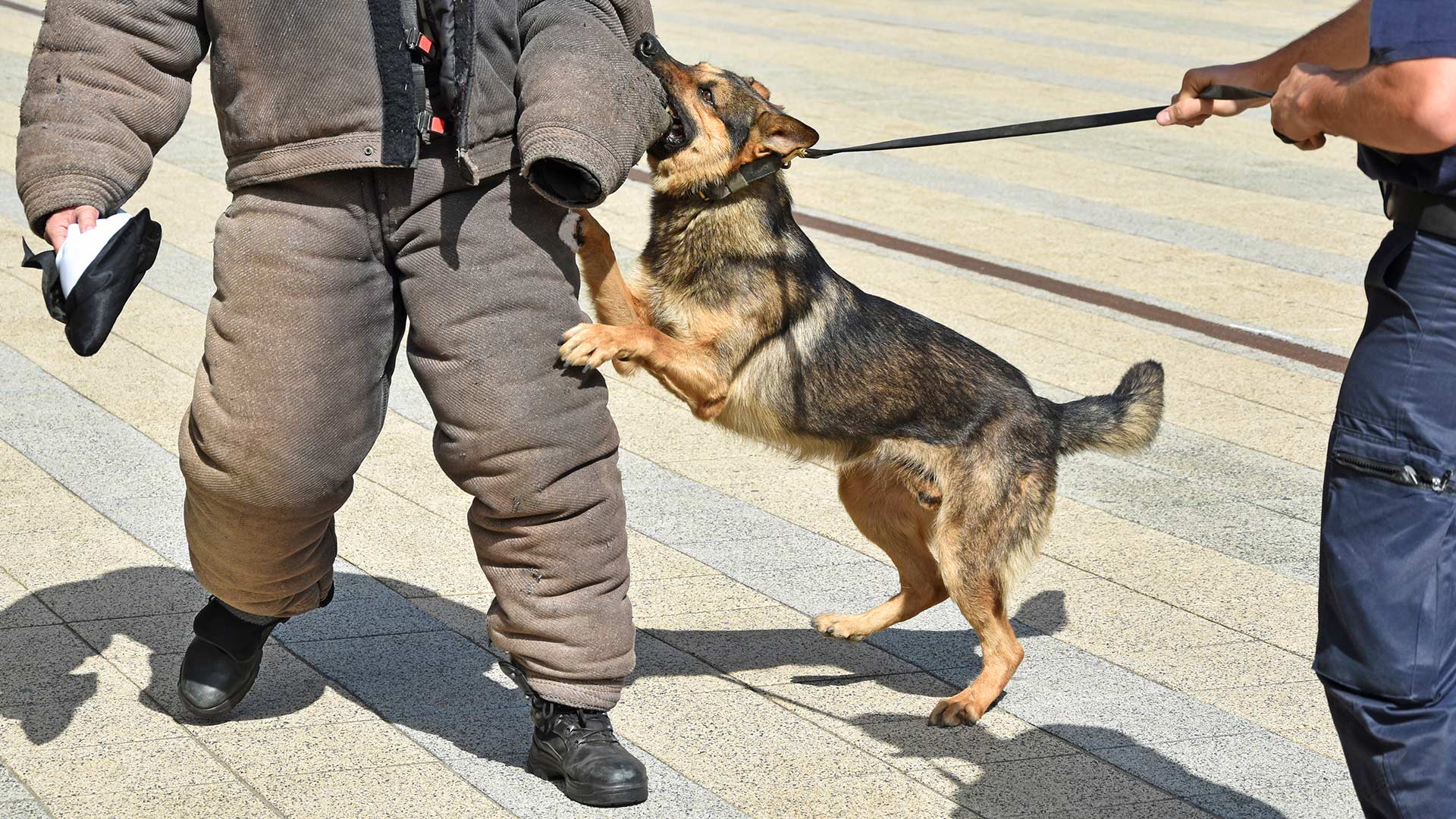
Canines: Canines have been a valuable option for law enforcement for decades. In many situations, canines have literally saved the lives of officers, citizens and even suspects. But now canines are under scrutiny for reasons that defy logic. The premise that canines are utilized as a tool against one particular racial group over another is unsubstantiated and patently false. The deployment of a canine is based upon the circumstances of a situation, notwithstanding the race, gender or natural origin of the perpetrator(s). Unfortunately, the same groupthink that led to the prohibition of LVNR is now at play with canines.
Body weight control: Another one of the outgrowths of the post-Floyd era is the limitation and/or restriction on using body weight to control a suspect on the ground. In my review of recent force scenarios, I have noticed a reticence to apply body weight in the handcuffing process. In some cases, departments have banned the use of body weight entirely, leaving officers to fight with flailing suspects. In many situations, this reluctance to apply weight results in the suspect getting up off of the ground, thus causing officers to use more hands-and-feet-related tactics. This is clearly a step in the wrong direction. No one denies that George Floyd’s death was a tragedy, but it shouldn’t result in the loss of body weight as a tactic for control.
Less-lethal means: Everything is under scrutiny, including the Taser, Super Sock, beanbag, pepper spray, etc. In some cases, the critics say the Taser should have been deployed instead of a firearm to stop a threat. In other cases, they say the Taser resulted in a person’s injury or death. Some agencies have gone so far as to restrict the use of the Taser to appease the critics. This logic is absurd. Officers are trained to use the tools they have at their disposal. It is impossible to predict the effect of a Taser, or any other intermediate tactic, in any given situation. And the deployment of other less-lethal options are under scrutiny as well. A small number of rioters have been injured by less-lethal munitions, and the reaction has been to ban the use. If this trend continues, all less-lethal options will be banned as well. Then what? Physical force? Kicking and punching a person into compliance? Let us not forget that less-lethal means were developed to avoid physical engagement. This is clearly a step backward.
Now what?
It’s beyond time for law enforcement leaders to step up and denounce the force limitations being placed upon the profession. There are a handful of bold leaders across the country who have been vocal in their opposition, but they are the rare exceptions. At the current trajectory, officers will have no force options available in the future. In the utopian society, officers don’t use force because everyone cooperates and harmony abounds. We all know this is not the real world. The fact of the matter is that people will continue to fight, flee and resist the police into perpetuity. Instead of limiting the force options for officers, what if the activists and critics focused their energy and resources on educating everyone about the importance of cooperation during a police encounter? To date, we have seen no such initiatives. In the meantime, the law enforcement profession will continue to do more with less and eventually will just have to walk away from any situation where there is resistance. After all, you cannot use force if you have no options. In my opinion, I believe that no force is the ultimate goal of the anti-police factions. This acquiescence trend must be reversed.

Paul Cappitelli
[ad_2]
