
[ad_1]
U.S. Supreme Court
Gorsuch’s Title 42 statement is ‘a remarkable jeremiad against COVID mitigation policies,’ law prof says
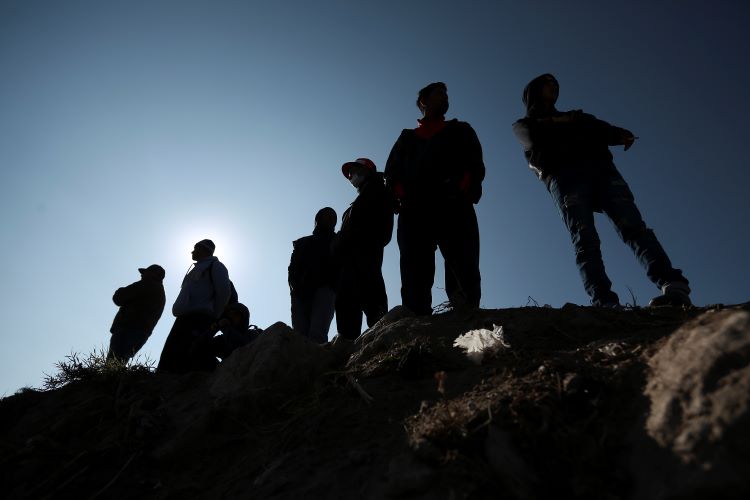
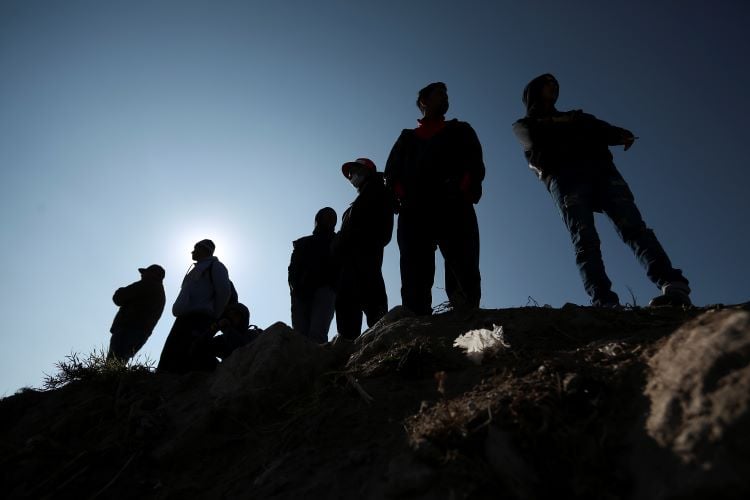
Migrants stand near the U.S.-Mexico border in Ciudad Juarez, Mexico, on Dec. 19, 2022. Photo by Christian Chavez/The Associated Press.
Justice Neil Gorsuch issued a lengthy statement criticizing “rule by indefinite emergency edict” Thursday, when the U.S. Supreme Court issued an order related to a COVID-19-pandemic-era immigration policy.
Stephen Vladeck, a professor at the University of Texas School of Law, characterized Gorsuch’s statement as “a remarkable jeremiad against COVID mitigation policies” in his weekly One First newsletter. Law.com, on the other hand, called the statement “extraordinary” and “unusual.”
At issue was a bid by Republican-led states to intervene in a case that blocked a Title 42 policy adopted during the Trump administration. The blocked policy had quickly expelled asylum-seekers at the Mexico border on the ground that they could contribute to the spread of COVID-19.
The Supreme Court’s May 18 order in Arizona v. Mayorkas vacated an appeals court’s refusal to allow the states to intervene and directed the court to dismiss the case as moot. According to the New York Times, the order was likely due to President Joe Biden’s decision to end the COVID-19 health emergency.
Gorsuch had agreed with the Supreme Court’s action after he dissented from a prior Supreme Court decision to keep the Title 42 policy in place pending further litigation.
Gorsuch began his May 18 statement by detailing the history of fights over the Title 42 policy.
“Even more importantly,” he wrote, “the history of this case illustrates the disruption we have experienced over the last three years in how our laws are made and our freedoms observed. Since March 2020, we may have experienced the greatest intrusions on civil liberties in the peacetime history of this country. Executive officials across the country issued emergency decrees on a breathtaking scale.”
Gorsuch went on to criticize governors and local leaders for lockdown orders, mandated closings and threats to sanction violators. And he criticized federal executive officials for “emergency immigration decrees” and for vaccination mandates, tenant protections and possible pressure on social media companies “to suppress information about pandemic policies with which they disagreed.”
Gorsuch said state legislatures and Congress “too often fell silent” as “executive officials issued new emergency decrees at a furious pace.”
Courts addressed only a few of the executive intrusions, Gorsuch said.
“In some cases, like this one, courts even allowed themselves to be used to perpetuate emergency public health decrees for collateral purposes, itself a form of emergency lawmaking by litigation,” he wrote.
Gorsuch said many lessons could be learned from the COVID-19 pandemic.
“One lesson might be this: Fear and the desire for safety are powerful forces,” he wrote. “They can lead to a clamor for action—almost any action—as long as someone does something to address a perceived threat. A leader or an expert who claims he can fix everything, if only we do exactly as he says, can prove an irresistible force. We do not need to confront a bayonet, we need only a nudge, before we willingly abandon the nicety of requiring laws to be adopted by our legislative representatives and accept rule by decree.”
Vladeck argued that the emergency actions were based on statutes, “rather than executive claims to extraordinary constitutional emergency powers.” The Title 42 immigration policy, for example, was based on the Public Health Service Act of 1944.
“Justice Gorsuch’s objections then are to how the executive branch interpreted these statutory delegations of substantive authority,” Vladeck wrote. “That’s not to dismiss his objections; presidents can abuse statutory delegations just as much as they can abuse their inherent constitutional powers. But I think it changes the tenor of the conversation rather significantly when these disputes are (properly) framed as statutory interpretation debates.”
[ad_2]