
[ad_1]
A new report released Tuesday showed that in a majority of U.S. states, LGBT people experience higher rates of poverty than cisgender straight people. The findings were released by the Williams Institute at UCLA School of Law.
Statistics reveal that more LGBT Americans are poor in the South at 24%, followed by the Midwest (23%), the West (22%), and the Northeast (18%).
Researchers analyzed data from the 2014-2017 Behavior Risk Factor Surveillance System (BRFSS), a health survey by the Centers for Disease Control and Prevention that collects state data on health-related risk factors and conditions among adults. The BRFSS offers an optional module that asks respondents to identify their sexual orientation and gender identity, and 35 states included that module in their state-level survey.
The survey does not collect data from youth. As a result, the study does not provide information about LGBT people under age 18, or LGBT people of any age in the 15 states that do not collect the data.
In addition to poverty rates, researchers examined social statuses that traditionally contribute to economic stability, including gender, race, age, and urban-rural residence in some states.
“There is so much more to learn about LGBT poverty in individual states,” said lead author Soon Kyu Choi, project manager at the Williams Institute. “We need to better understand the connection between differing poverty rates across states with variations in LGBT related public policies and public attitudes that may limit economic opportunities for LGBT people.”
Key Findings: Midwest: Illinois, Indiana, Iowa, Kansas, Minnesota, Missouri, Ohio, and Wisconsin
•LGBT people have higher poverty rates than cisgender straight people in all eight states.
•Transgender people have higher poverty rates than do cisgender men in Illinois, Indiana, Iowa, Kansas, Minnesota, and Ohio.
•LGBT people of color have higher poverty rates than White LGBT people in Illinois, Indiana, Iowa, Kansas, Minnesota, Missouri, and Ohio.
Key Findings: Northeast: Connecticut, Massachusetts, New York, Pennsylvania, Rhode Island, and Vermont
•In all six states, LGBT people have higher poverty rates than cisgender straight people.
•LGBT people of color have higher poverty rates than White LGBT people in Connecticut, Massachusetts, New York, Pennsylvania, and Rhode Island.
Key Findings: South: Delaware, Florida, Georgia, Kentucky, Louisiana, Maryland, Mississippi, North Carolina, Oklahoma, South Carolina, Texas, Virginia, and West Virginia
•In all Southern states except Florida, LGBT people are more likely to be poor than cisgender straight people.
•In Florida, Kentucky, and Virginia, rural LGBT people have higher poverty rates than urban LGBT people.
•In West Virginia, the urban LGBT poverty rate is higher than the rural LGBT poverty rate.
Key Findings: West: California, Colorado, Hawaii, Idaho, Montana, Nevada, Washington, and Wyoming
•LGBT people have higher poverty rates than cisgender straight people in Hawaii, Idaho, Montana, Washington, and Wyoming.
•Transgender people have higher poverty rates than do cisgender people (or cisgender men) in California, Hawaii, Montana, Nevada, and Washington.
“This study provides a foundation for understanding LGBT poverty by state. But clearly, more data are needed in the states that are not yet collecting SOGI data,” said study author Bianca Wilson, Senior Scholar of Public Policy at the Williams Institute. “As more states begin to include these critical questions on all of their surveys, we can provide nuanced analyses that inform effective policies and interventions that meet the needs of LGBT people in specific states.”
This study is part of the Pathways to Justice Project, a long-term project at the Williams Institute examining poverty rates, personal narratives, and experiences with economic development and food insecurity services among LGBTQ people. Read the report.
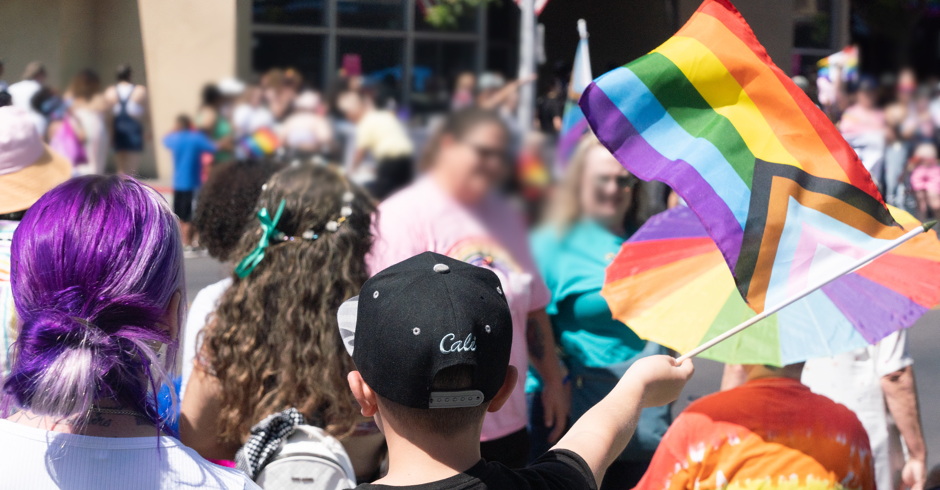
Image via Shutterstock.
[ad_2]