

[ad_1]
You’re on patrol when you see a vehicle driving way over the speed limit. You activate your radar and it indicates the vehicle is traveling 80 mph in a 45 zone. You turn on your lights and attempt to pull the vehicle over, but it fails to stop. You reach speeds of around 100 mph attempting to catch up to the vehicle. When you finally get the vehicle stopped the driver tells you he is on his way to work, refuses to provide you with his driver’s license when asked, then gets in his car and drives away.
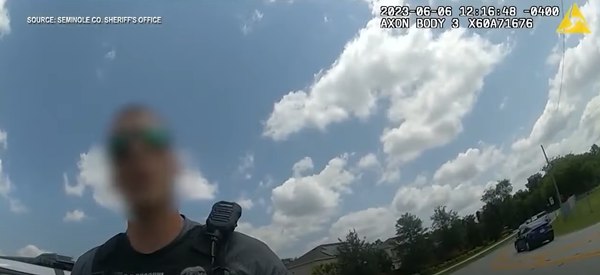
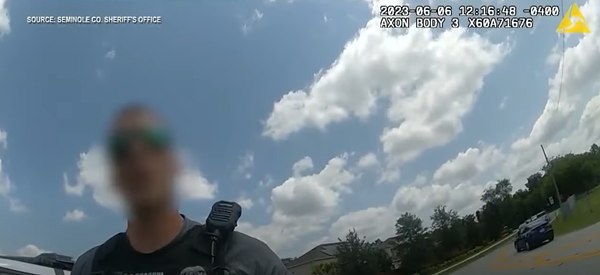
How you handle the situation is pretty simple. However, in this case, the driver is a uniformed cop and the vehicle is a marked squad car. That is exactly what happened to a Florida officer on June 6. Let’s watch the bodycam video of the incident and discuss.
This incident brings into question the issue of “professional courtesy.” This is a topic so volatile that on at least one cop Facebook page I belong to the topic is a forbidden discussion. Since this is a tactical analysis, I won’t be addressing that particular issue. My thoughts on it can be found here: Defining “professional courtesy.”
Now let’s look at the tactics in this situation.
Speeding in your squad car
You have the lawful authority to exceed the speed limit provided you fall under the statutory and departmental policy requirements to do so. That authority is not a permission slip to drive as fast as you want. You are still required to operate your squad at a speed that allows you to drive safely to ensure you don’t endanger yourself or others. Failing to use proper caution has landed more than one officer in prison.
Speeding in your squad car outside that lawful authority opens you to criminal and civil liability. Engaging in behavior that increases the likelihood of you being injured personally, professionally, or financially is a poor tactic.
Culture
Question: “Why do cops speed?” Answer: “Because they can.”
I know there aren’t any cops who haven’t exceeded the speed limit off duty. Get into a squad car and the likelihood of being pulled over drops dramatically. Why?
- Because people usually assume if a squad is speeding the driver is doing it for a lawful reason.
- The only people capable of pulling over the police are the police, and we don’t like to do that.
In this case, we have a situation involving a cop who thinks it is OK to drive at a speed approaching twice the posted speed limit because he is “on his way to work” and a deputy who doesn’t. I can’t speak to the culture of the two agencies, only the tactics shown in the video. I don’t know if the cop’s behavior would be condoned by the culture of his department. It obviously wasn’t by the administration.
Tactics
I’m going to address the tactics of the Orlando officer:
- Driving almost twice the speed limit in your squad car on the way to work: The liability issues have already been discussed above.
- Failing to stop for a squad car’s blue lights: Whether you think it‘s OK or not for cops to drive like this becomes a moot point when you see blue lights behind you. You are required by law to pull over.
- Refusing to provide identification when lawfully requested: Again, you may strongly disagree with the enforcing officers’ actions, but your badge doesn’t trump the law.
- Driving off from the stop: If things aren’t bad enough, don’t make them worse, adding one more criminal act to the list.
Ego
Ego gets every cop into trouble at some time during their career. Imagine how this situation would have ended if the officer had pulled over when he saw the blue lights. There wouldn’t be a video being played on all the major news networks and across the internet that reflects poorly on our profession. Remember that the choices you make as an individual officer reflect on all of those who wear a badge.
Those choices also have a cop on suspension, charged with fleeing a law enforcement officer, reckless driving, speeding and resisting arrest, and facing possible termination.
Professional courtesy
If you count on professional courtesy to get you out of situations due to your choices, be prepared for the consequences if you run into a law enforcement officer who doesn’t share your beliefs. Take accountability for your choices and the consequences even though you don’t agree with the officer. Better yet, never put another cop in that position.
Police1 readers respond
- This happened to me once back in the 80s, though the offender didn’t take off after being stopped. I was watching a house for a suspect vehicle in an unrelated case when another officer called me and told me a van he could barely describe due to its speed was barreling in my direction. Its speed was well north of 80mph on a street posted at 30. When it blazed past me, I pulled out behind it and described it as belonging to a local cable company that had white vans with blue stripes on them. After about a mile, we got it stopped and I then saw both the star on the rear and that the stripe was actually green; it was a sheriff’s detention unit. The deputy driving it was obviously nearing retirement age and told us he was “going to pick up a prisoner.” (The SO would often round through the local municipalities and fetch arrestees for them.) I told him that, upon realizing whose van it was, we had genuine concern that it might have been jacked by a prisoner. All we got from him was attitude and, “So, what are you gonna do? Write me a ticket?” By then, my supervisor was on scene. We were so steamed at him that we sent him on, while my sergeant went back to the station and called his. I’m not sure if anything came out of it. I can’t say for sure if I would have made an arrest in the above situation. Depending on the actual dynamics of the encounter, it’s certainly possible.
-
If someone commits an infraction whether in uniform or not, treat them the exact same. Turning a blind eye or selectively enforcing rules promotes distrust and resentment from citizens. Police are supposed to be held to a higher standard, act like it!
-
A similar situation happened to me. I encountered an unmarked car flying down the interstate doing over 100 in the 55. They wouldn’t answer my radio frequency or our joint channel and the county had nothing going on. The cruiser got off the next exit and stopped for a red light. I walked up and it was two of my department guys going to the same program that I was headed to. I opted to handle it internally. Both retired rather than face discipline and both received “general” discharges, therefore, they don’t meet RLEIA under our department standards.
-
Police officers are being treated poorly generally. One of the most important things is to feel the support of their fellow officers. Even if the intervening officer did issue a summons, make an arrest, or involve internal affairs, they may find themselves very unpopular with their colleagues. I am not saying to ignore felonies but the above is not what I would recommend making an issue of.
-
Some of the above comments are absolutely ludicrous. The fact that this “officer” would actually stop a fellow LEO traveling in a fully marked vehicle tells me all I need to know about him. At the end of the day, this is nothing more than a simple traffic violation. Now the officer is facing termination. Shame on the pursuing officer. There aren’t enough “bad guys” out there for you? Instead, you’ve resorted to eating your own.
-
Since we don’t always know why a marked unit is driving over the speed limit, how about contacting that agency before initiating a stop on a marked unit? This would save the negative impact on both departments involved. There are a lot of reasons why an officer would be traveling over the speed limit with no lights or siren (code 2). But I don’t agree with driving that way “because he can.” Law enforcement as a whole is having a hard enough time maintaining support from the public. Making these types of contacts public only makes things more difficult for officers trying to do their job.
-
First I’d get a warrant for his arrest. Second I think he needs to find another line of work, maybe a race car driver at the track. Third, there’s no place in law enforcement for this kind of employee. Done. Let’s move on. Cops like this give the good ones a bad rap.
-
One way to get speeding cops is to just report their behavior to their agencies. Believe me, the supervisors get involved and the offending officer gets hassled.
-
Quite frankly, every time I have ever seen a marked unit, from another jurisdiction speeding I assumed there was a good reason. I never gave it a second thought so it never became an issue.
-
I would have applied for a warrant for flight to avoid arrest. It’s one thing to be rude, but he was especially disrespectful to the officer who was legally justified in stopping him. The suspect/officer’s sense of entitlement is what is giving police officers a bad reputation today.
-
Honestly, with the way he was acting, I would write it up and present it to the prosecutor for either charges or a grand jury indictment. I agree that his attitude has no place in law enforcement and the deputy was doing the right thing looking out for the public. Having the prosecutor present the case to a grand jury though, clears you, the officer, of having to make the final decision on charges.
-
I would first inform my supervisor of the incident, and in my situation, my supervisor asked me if I had any objection to him making contact with the officer’s supervisor. The officer in my incident was off duty in his POV.
-
I would have identified the vehicle and called the department it belonged to in order to ascertain if there was a legitimate reason it was traveling at such speed. No traffic stop would have been initiated because you don’t know why. I am assuming the driving behavior involved speed alone considering no other reckless behavior was identified. The main reason a marked police vehicle would be traveling at high speeds is an emergency response. The last thing an emergency response needs is a delay in the response. If it wasn’t warranted, then the agency could deal with the problem administratively and then criminally if needed.
-
This is a great discussion to have. I had a similar situation happen where I observed a marked patrol unit over 100 mph when running radar. I called dispatch, but they weren’t able to ascertain any radio traffic from that agency to confirm or refute a real reason. I reached out to my chief and asked him for his opinion, and let him make whatever decision he wanted to make.
-
I think neither of them were in the right in this situation. The officer shouldn’t have been doing what he did but the deputy should have handled it differently. Instead, all that happened was it caused division between the agencies and made all of us look bad. Where I work a simple phone call to the supervisor handles it much better than any criminal charge would.
-
The officer was absolutely within the scope of his duty to make the stop. The deputy should have stopped when he saw the lights. But, I do think the officer could have handled it informally and not taken him out of the vehicle. Let him know he should slow the heck down, and send him on his way. If the deputy has an attitude after that, by all means, call his COC and allow them to handle it. If he’s still being uncooperative, then do what you do! treat him like you would treat any uncooperative driver. Because, at that point, he’s chosen to be beneath his badge.
-
How is the deputy to know who is driving? It could have been a killer who stole the PD car after killing the officer. The deputy handled the situation perfectly in my opinion. He identified the driver and the vehicle and reported the attitude. I’m pretty sure if the offending officer would have admitted to his speeding and apologized, that would have been the end of it.
-
I would totally ignore the MARKED POLICE CAR speeding past me because if I’m getting the crap beat out of me, I would hope that same cop would speed to come help. Shame on that deputy. It shows you where law enforcement is heading when this happens.
-
The pursuing officer needed to do one thing, get the car number and agency name. Give that information and BWC to either his supervisor or that speeding officer’s Internal Affairs. This absolute waste of taxpayer money to pursue the officer is such a waste of time. Also, I am curious if a GPS audit was done on the pursuing officer I wonder if it would show him exceeding the speed limit at any point in the course of his day. I suspect it would.
-
ALL police officers should set a good and law-abiding example to the public on duty and off. This is what I was taught in the police academy over 40 years ago. I believe this holds true even more so today with cameras recording nearly everything everywhere. Yes, I believe in police discretion and professional courtesy, but I also believe there are limits to these concepts. I see no wrong in the deputy’s action and in that situation would probably do the same.
-
Let me start by saying the Orlando officer should be harshly disciplined if these are the only facts. I am also commenting on this situation without the benefit of communication between the departments. That being said, I believe the deputy should have immediately called dispatch and advised he was following a local officer to whatever his final destination was. The speeding officer could have been first to a scene and needed backup. Upon arrival at the destination, that would have been the time to ascertain the reason for the high rate of speed. With the limited facts presented, I imagine the local officer was heading into his station and the deputy would have been placed in an awkward environment. Clear and concise radio communication as well as dash and body cams would have provided ample evidence for the state attorney to make a charging decision if needed. These two departments depend on each other for backup. I am not in favor of either of their actions.
-
I got dusted off by a marked unit from another agency going 108 in a 60 (I was on a traffic stop, and the cruiser didn’t even change lanes from away from us). I called the agency and let a Sgt. know that it wasn’t appreciated. Found out he was late for an off-duty job. No cite, no confrontation, I let his boss handle it.
-
No lights, no speeding! Radio activity should inform you of an emergency. Treat the same as a civilian. A cop breaking the law is still breaking the law. Those inforcing the laws should lead by example, not by ego or bro status.
-
The arresting officer did the right thing by stopping the speeding officer – he was doing what he is being paid to do, enforce the laws. A stern warning would have been more than justified, but the fleeing officer made it a point to do all the wrong things (on video), things we have no problem charging the average citizen if they did what he did. I’ve stopped numerous off-duty officers in my nearly three-decade career; only a couple of them warranted getting a supervisor notified because they thought they were above the law. We are held to a higher standard, and expected to uphold the laws, on duty or off duty. It’s incidents like this that reflect on all of us: remember, one bad apple doesn’t ruin the whole bushel.
-
While the deputy had every legal right to stop the officer, I probably would not have continued when the officer did not stop. Instead, I would have handled it internally between the departments. This turned into an ugly situation in the public’s eyes and that could have been avoided with the same outcome.
-
I believe it is bad form for another jurisdiction to initiate a traffic stop on a marked unit unless it has been stolen or the officer is showing clues of not being in control of the vehicle. That said, if officers are continuing to drive recklessly from another jurisdiction in my jurisdiction, I would refer it to their supervisor. If it continues to be an issue, start crawling up the chain of command until it does stop.
What do you think? Share your opinions on this traffic stop in the box below.
[ad_2]


