


[ad_1]
In the wake of Ohio’s legalization of recreational marijuana, state lawmakers are stepping in to assist law enforcement agencies grappling with the financial burden of replacing police K-9s trained to detect cannabis.
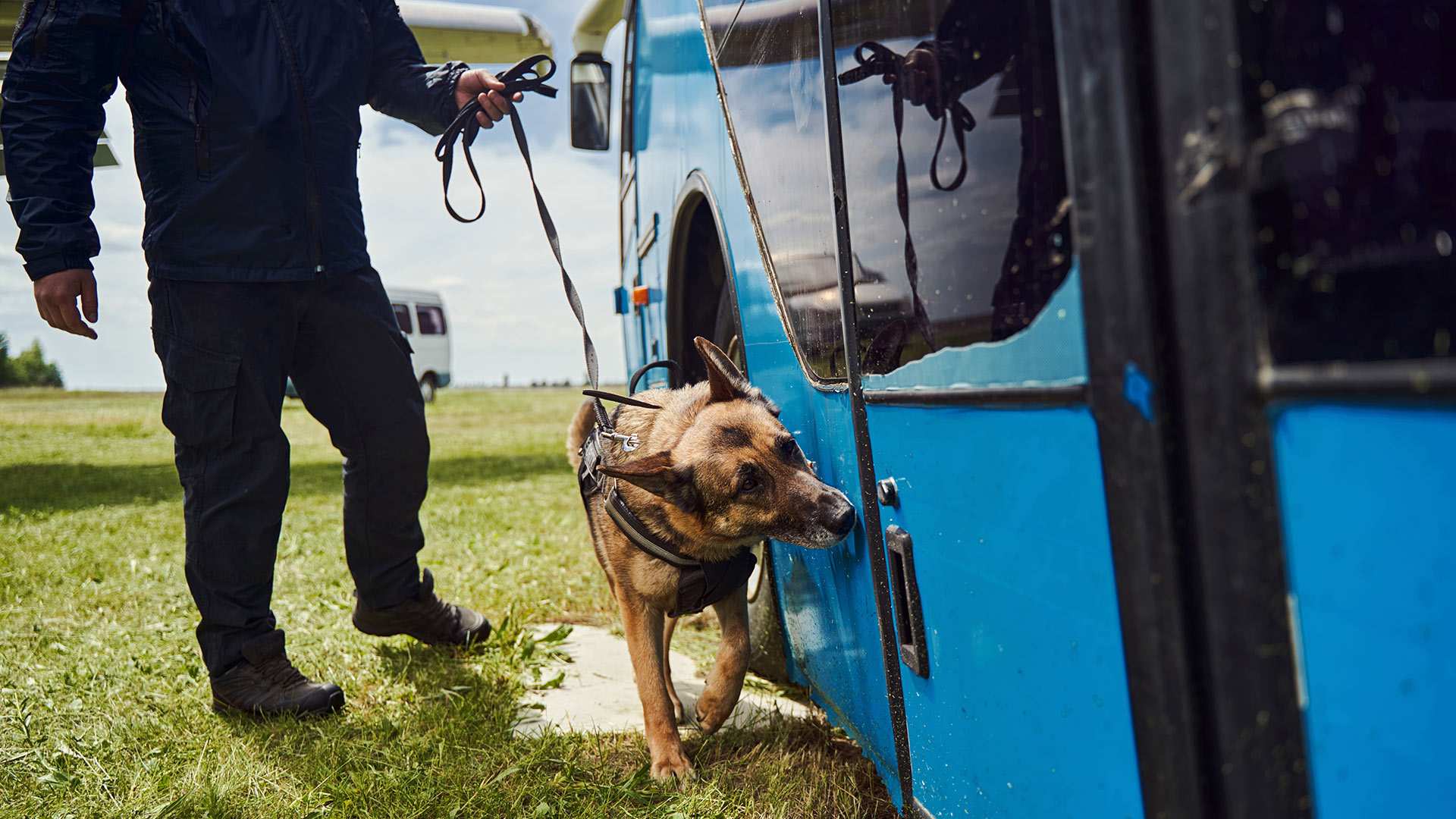
State Representatives Sean Brennan and Josh Williams recently introduced a bipartisan bill aimed at providing financial support to agencies in need. The proposed legislation seeks to allocate up to $20,000 per dog to help offset the costs associated with acquiring, training and equipping narcotics detection dogs that are not trained to alert to the smell of marijuana. It estimated that nearly 400 of the state’s police dogs will need to be retired from narcotics detection because they have been imprinted with the smell of cannabis, which cannot be unlearned.
Whitehall Police Department Deputy Chief Daniel Kelso explained the predicament legalization presents for law enforcement.
“It does put us in a bind because the dog can’t look at us and tell us what drug he is sniffing,” Kelso told WSYX News. “He knows a certain number of drugs and alerts if he smells one of them.” That opens up the possibility for any of a dog’s alerts, even for non-marijuana drugs, to be challenged in court.
Whitehall Police Officer Matthew Perez currently works with his department’s sole K-9 that is not trained to detect cannabis. He pointed out the financial impact of acquiring new dogs, which can cost $7,500 to $11,000 each. “That’s a lot of money, so 20 grand can definitely make a difference for smaller agencies that really want to continue their K-9 programs,” he told KDKA News.
However, its sponsors assured that the grant money would not be used to force marijuana-trained K-9s to retire, but instead to encourage the departments to find other uses for them.
“I don’t want to understate that the dogs have more uses than just the drug aspect,” Kelso said. “They are not getting fired. They are not being retired because of this. Yes, we might have to have a work-around on some issues; but, we are still going to use them, and we are still going to keep people safe.”
The bill aims to alleviate the burden on both police agencies and taxpayers, especially those in communities where voters did not support the legalization of marijuana.
“We don’t want local residents to have to foot the bill. There are communities that voted no on Issue 2, but their dogs need to be replaced just because the rest of Ohio elected to enact adult-use cannabis,” Williams stated.
According to lawmakers, the proposed legislation slates a total of $6 million to be distributed in one-time grants for the year 2024, with each agency eligible to receive up to $20,000 per dog.
Brennan reflected on the unforeseen consequences of marijuana legalization on law enforcement, and hopes the legislation will mitigate any issues.
“I don’t think that anybody that voted for the issue, either intended or knew that this was even going to be a problem for our police departments, and it’s a real concern,” he stated.
The legislation has since garnered support from officers like Perez, who sees it as a crucial lifeline for departments facing budget constraints.
“I think the [grant money] would be super beneficial for some departments that may not have as much money or profit coming in,” Perez added.
[ad_2]
