


[ad_1]
Law enforcement’s use of drone technology for the purposes of surveillance and crime-fighting has met with considerable criticism and legal roadblocks from privacy advocates, but data from the Electronic Frontier Foundation (EFF) shows that drones are likely to stay after all.
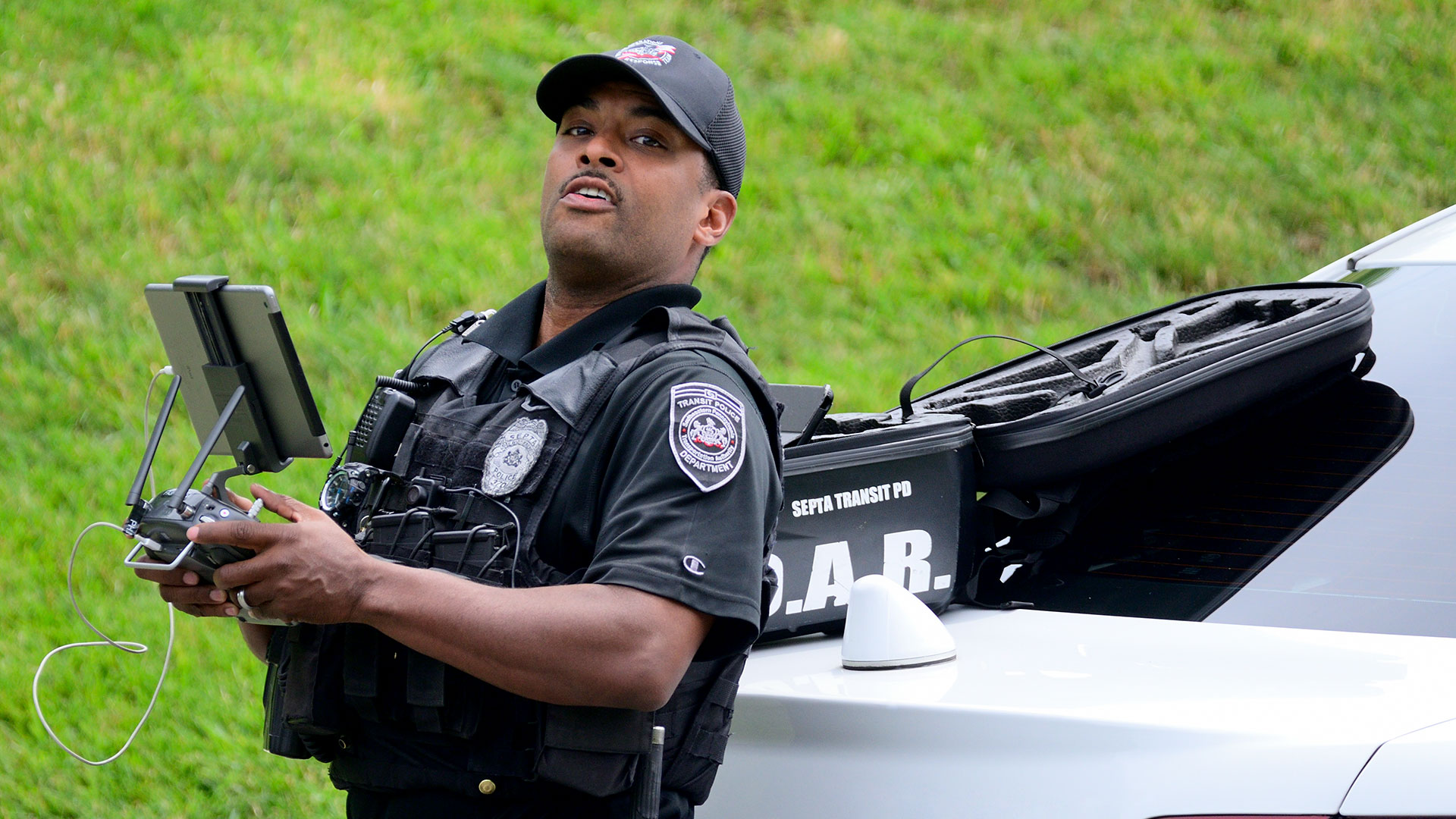
According to the EFF — a nonprofit that focuses on technology’s impact on civil rights — roughly 1,172 police departments across the country are utilizing drones for a variety of purposes, including search and rescue missions, surveillance and crowd monitoring.
“Over time, we can expect more law enforcement agencies to deploy them,” the EFF wrote in an article on their website.
“Drones don’t disappear once the initial justification for purchasing them no longer seems applicable. Police will invent ways to use their invasive toys, which means that drone deployment finds its way into situations where they are not needed, including everyday policing and the surveillance of First Amendment-protected activities.”
The Baltimore Police Department is one agency that has shown interest in drones since they first became available to law enforcement but has faced an uphill battle along the way.
In 2020, the BPD finally got its Aerial Investigation Research program off the ground again after it was shut down four years prior due to public backlash.
The pilot program, which received funding from two Texas billionaires, relied on drones to capture surveillance of the city over a period of six months and gathered around 12 hours of footage covering 90% of the city during that time.
However, the city council voted to end the program in February 2021 after a long court battle in which a federal appeals court ruled that it violated the Fourth Amendment.
According to the BPD, the images obtained by the drones during the program will be destroyed.
“The vast majority of the imagery … will be deleted,” and “any imagery not identified as relevant to a criminal investigation and reduced to an evidentiary packet will be destroyed after 45 days,” the BPD said in a statement.
A report from the Policing Project at NYU Law looked into BPD’s pilot program and gave several recommendations on how it can balance privacy issues with public safety.
“AIR collects data in bulk about the movements of people in its range, the vast majority of whom have done nothing in particular deserving of the government’s attention,” the study found.
To mitigate privacy risks, the study advocated for greater legislative oversight over the lawful use of drones in law enforcement programs.
Ultimately, the report was favorable to the BPD’s use of drones and found that the sacrifices to privacy were necessary to combat crime in the fourth-most dangerous city in the country.
“Some substantial portion of the population is subjected to surveillance, in the hope of advancing public safety,” the report wrote. “Were it not for the concern for public safety, there would be no need for surveillance.”
“Law enforcement’s use of surveillance technologies, particular ones as powerful as AIR, must be operated transparently and with public input,” the report concluded.
From various sources, it is clear that law enforcement agencies and drone manufacturers have no desire to abandon hopes of long-term partnerships.
“Drones remotely dispatched from the field could be part of law enforcement’s future, but before this becomes a reality, more law enforcement agencies need to deploy UAVs on a regular basis. As more and more agencies decide to deploy drones, they need to ensure their officers are properly trained and utilizing UAVs in a way that keeps public safety and privacy at the forefront of their deployment practices,” Clovis Police Department Captain Curt Fleming wrote.
“Agencies should also seek out companies who are leading the way in UAV advancements to explore how to best integrate UAVs into law enforcement’s response to in-progress calls.”
[ad_2]
