


[ad_1]
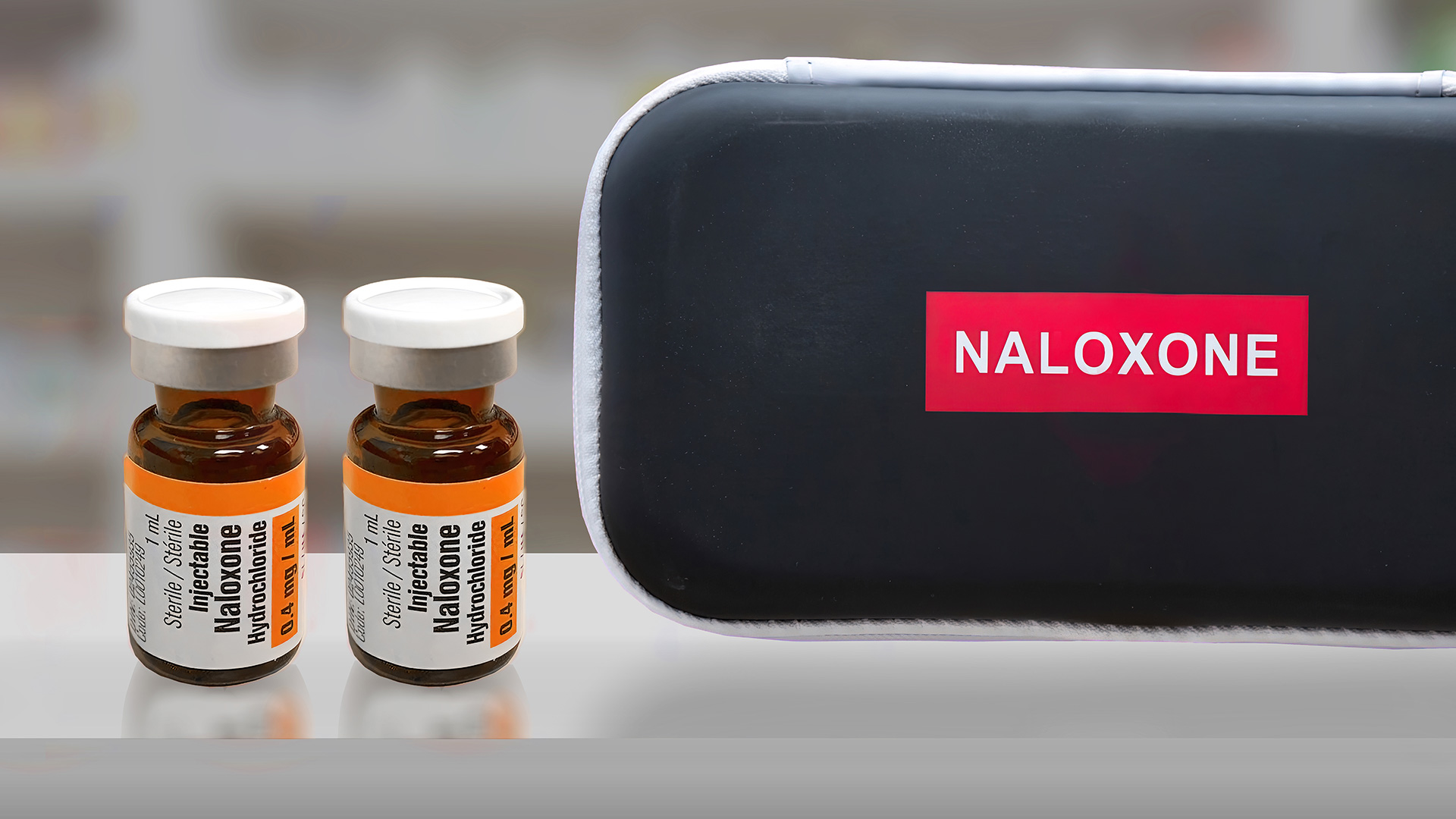
The Anchorage Police Department is considering changing its policy regarding the use of naloxone — a drug used to treat fentanyl overdoses — after advocates called for it to be carried by police officers.
“Going forward, we will probably have a change in our status on whether we’re carrying Narcan or not,” Chief Michael Kerle said in a recent Public Safety Committee meeting.
Currently, Anchorage officers do not carry naloxone, often known by the common brand name Narcan, and are just trained to perform CPR on overdose victims who are not breathing. However, after rising fentanyl overdose deaths in the state, advocates are pushing for anything that can protect future victims.
Sandy Snodgrass is one of those advocates. Her 22-year-old son, Bruce, was a victim of fentanyl poisoning last year. Snodgrass joined other demonstrators outside the APD headquarters to push for the use of the opioid overdose reversal drug.
She told Anchorage Daily News that she was “very grateful for [Kerle] for considering changing the policy.”
“The goal is to save lives. That’s the bottom line. And I think he wants that too,” Snodgrass said, adding that she hopes providing officers with the drug will lead to faster response times.
The APD is one of the few agencies in the region that does not equip its officers with Narcan. According to officials, this is because of the fast co-response times for paramedics who do carry the drug, making it redundant for officers to carry it as well.
However, Kerle said that Dr. Mike Levy, the Anchorage EMS areawide medical director with the Anchorage Fire Department, made him reconsider the issue.
Kerle cited an interview where Levy discussed the issue and said he was OK with the policy change.
“I just read the article, and [Dr. Levy] now says he doesn’t have a problem with us carrying it anymore. So we’re going to evaluate whether we should carry it,” Kerle said.
Levy advises the fire department on policy, and has worked with previous police chiefs in the past with developing medical policy. He said he has not discussed the Narcan issue with Kerle.
“He has always advised us he did not think it was a good idea for the Anchorage police to carry Narcan because we have a great co-response from the fire department,” Kerle said.
Levy recently told the Daily News that officers could carry Narcan as long as they were properly trained to do so and continued to perform CPR during overdoses. He said he would support the policy change for officers to carry Narcan if Kerle decided on it.
Advocates recently pointed to the fact that the department’s overdose policy has not evolved to meet the devastating rise of fentanyl poisonings. Since 2018, overdose deaths in Anchorage have nearly tripled. Last year, there were 245 overdose deaths, and six out of 10 were linked to fentanyl.
Project HOPE, a program with the state’s Office of Substance Misuse and Addiction Prevention, recently sent 600 naloxone kits to the department and said it would train officers on how to use them. However, the APD returned the kits because there was not currently a policy in place allowing officers to carry them, and until there is, Kerle felt they could better be used elsewhere.
The timeline for any policy change was unclear, but Kerle said ongoing funding is the primary barrier. “Everyone’s coming out of the woodwork to give free Narcan right now. Once that’s over, Narcan is like, $37.50 a dose, and we need to come up with a funding source,” he explained. “It’s going to be expensive, and the majority of that’s going to get thrown away because we’re not going to use it.”
In addition to purchasing the drug, training and safety costs could add to the total price tag.
[ad_2]
