


[ad_1]
The push for police reform in the wake of George Floyd has activated mandates across the country for both de-escalation and active bystandership. While the two are distinct, they are mutually reinforcing and together can help usher in change that has the potential to not only improve community–police relations but protect officers and the legitimacy of the profession.
De-escalation, particularly de-escalation grounded in principles of conflict resolution, like Insight Policing, requires specialized skills that help officers control aggression, resistance and noncompliance so that interactions with the public don’t come to force unless absolutely necessary.
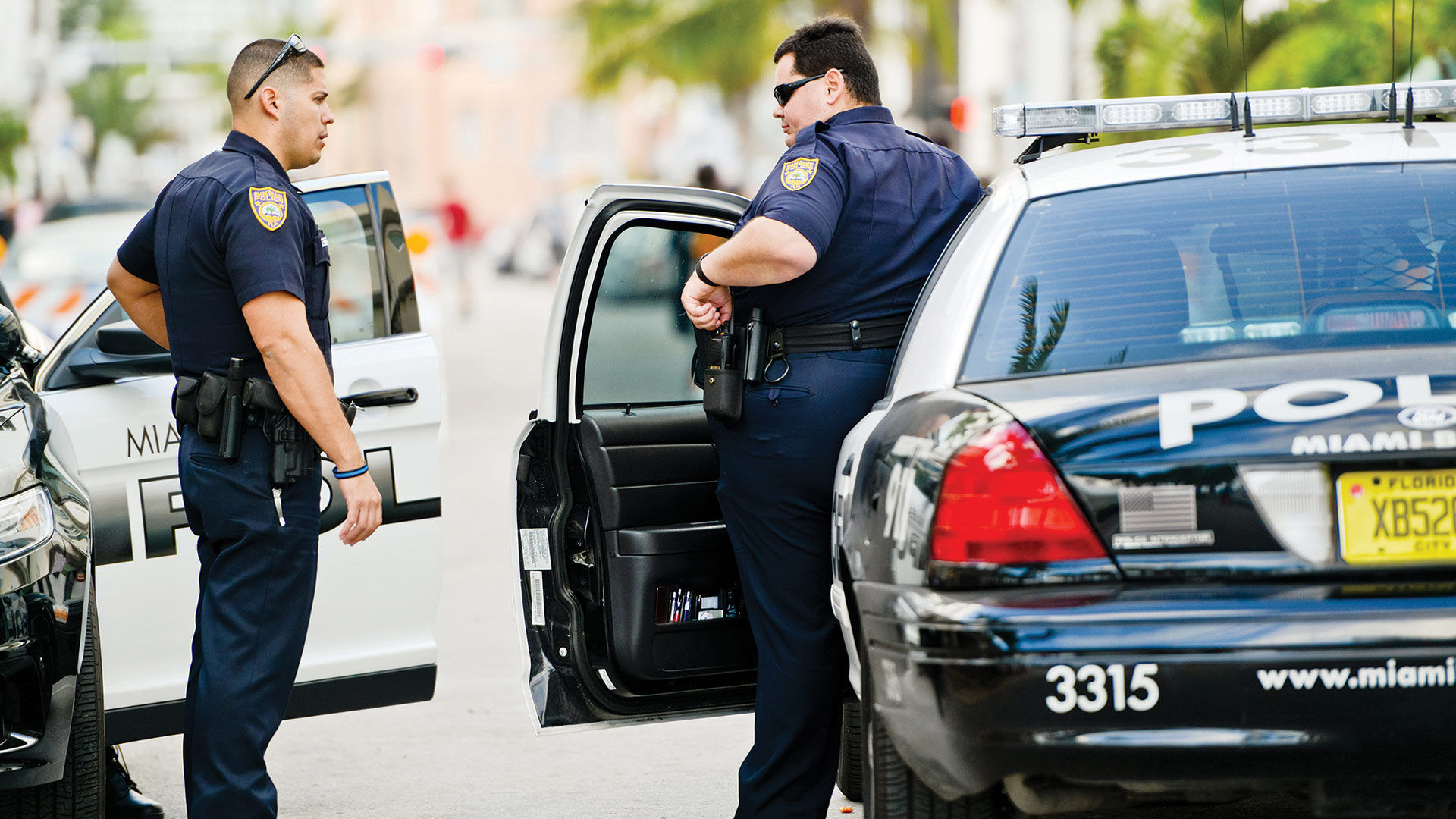
Active bystandership integrates the ideal of de-escalation into the organization by emphasizing the need for officers to look out for their partners and intervene when an officer is on the verge of using excessive force or not acting as they should. It’s the idea of see something, say something.
Active bystandership empowers officers to support one another in making smart choices in challenging interactions.
Active bystandership reduces mistakes, prevents misconduct and promotes the health and wellness of officers by empowering officers to support one another in making smart choices in challenging interactions. It reframes loyalty as stepping in to prevent a fellow officer from taking action that would risk their career, their life or their legitimacy in the eyes of the public. And it’s a skill that can be learned. Active bystandership requires officers to dial up their awareness of both themselves and their colleagues to identify factors like escalating emotion and excessive fatigue that can lead to rash actions or avoidable missteps.
Intervention tactics vary. They can be subtle and discrete when employed early in an escalating situation, looking like a hand on the shoulder accompanied by a calming reminder. Or they can be more explicit when early attempts are unsuccessful. An officer may need to intensify their intervention and step in more directly. The goal is the same — to prevent unnecessary harm.
We all like to think that we’d step in to prevent or stop harm when we see it, but the fact is that it is not easy. Not only does intervention require the courage to take responsibility for another person’s actions, but other social psychological inhibitors at play can cause us to not intervene. One example is the diffusion of responsibility, which is the belief that someone else will intervene and it’s not our job to do it. Police culture can add another layer of inhibitors as officers can feel reluctant to intervene as they may face backlash from their colleagues when they do. These challenges can generate conflict, which is why strengthening conflict resolution capacity is a critical support for active bystandership.
Conflict resolution capacity is the ability to recognize conflict in the moment, and rather than get pulled into it, which is our common response, engage it effectively for constructive outcomes. Insight Policing: Conflict Resolution for Law Enforcement teaches officers that the first step in building conflict resolution
capacity is knowing how to recognize conflict behavior and understanding the conflict decision-making that motivates it. This means looking out for and understanding the mechanics of why someone might engage in aggressive, resistant or noncompliant behaviors — behaviors that can easily lead to force and might heighten the need for peer intervention.
To put the mechanics simply, conflict behavior — behavior that ignites and escalates conflict — is the result of a decision to defend in response to a perception of threat. Threat that instigates conflict isn’t just physical threat, but includes threats to our sense of self, threats to what we want to achieve and threats to the way we believe people should interact.
When we can understand that conflict behavior is a function of threat and defense, we can position ourselves to step back and discover what the threat is and how one’s defensive behavior is meant to help. We can get curious in a way that can temper threat and activate the reasoning brain. This can help officers in situations where they are either reluctant to intervene or when an effort to intervene is met with resistance.
Let’s look at an example. Imagine a scenario where officers are responding to a larceny. The subject is being loud and noncompliant, resisting the officers’ efforts to get the subject into the squad car. As the subject intensifies his resistance, the officer trying to get him into the car begins escalating force. At first with verbal commands, but quickly with physical effort — beginning to push and punch the subject in an effort to get compliance.
An officer on backup is witnessing the escalating situation, which looks to be heading toward excessive force. The officer wants to step in and say something, but is held back by fear. His internal audiotape is running fast: What if my gut is wrong and the officer is acting in the right way? What if I’m not seeing the whole picture? What if my partner resents me for getting involved? What if he retaliates?
The worries and concerns are flooding the officer, keeping him from acting. Meanwhile the situation is getting more and more violent, witnesses are crowding, phones are out. The officer’s freeze behavior is conflict behavior — it’s a defensive response to feelings of threat.
In an act of self-reflection, the officer could leverage his conflict resolution capacity to first recognize his inaction as conflict behavior and then get curious about the threats that are keeping him from acting. He could ask himself, “What is the worst that will happen if I’m wrong? What am I really afraid of if he retaliates?”
Asking himself these questions gives the officer the opportunity to reflect on his answer, rather than being stalled by fear. He realizes that the worst thing is not being wrong, but being party to excessive force. This snaps him out of his inaction, allowing him to confidently intervene for the benefit of everyone involved.
If the officer does intervene, and the officer he’s intervening shouts back in anger, the officer can again leverage his conflict resolution capacity to sidestep a potential conflict interaction.
He can recognize that his partner’s angry reaction is conflict behavior — a decision to defend in response to a feeling of threat. He can reassure his partner that he’s intervening with good intentions, that he’s there to have his back. If that’s not enough, he can get curious. He can verify what he’s noticing: “Look, I can see that what I did is upsetting you.” And then he can ask, “What do you think you’re going to lose by easing up?”
This question targets the partner’s feelings of threat. They spur him to think critically about what upsets him about the intervention and what’s important about escalating with the subject. This opportunity to self-reflect and reconsider allows the partner to adjust his response.
When our goal is to reduce harm, save lives, save careers, reduce stress and strengthen legitimacy, the skills of conflict resolution and active bystandership are essential complements.

Dr. Megan Price and Karen Collins Rice
[ad_2]
