


[ad_1]
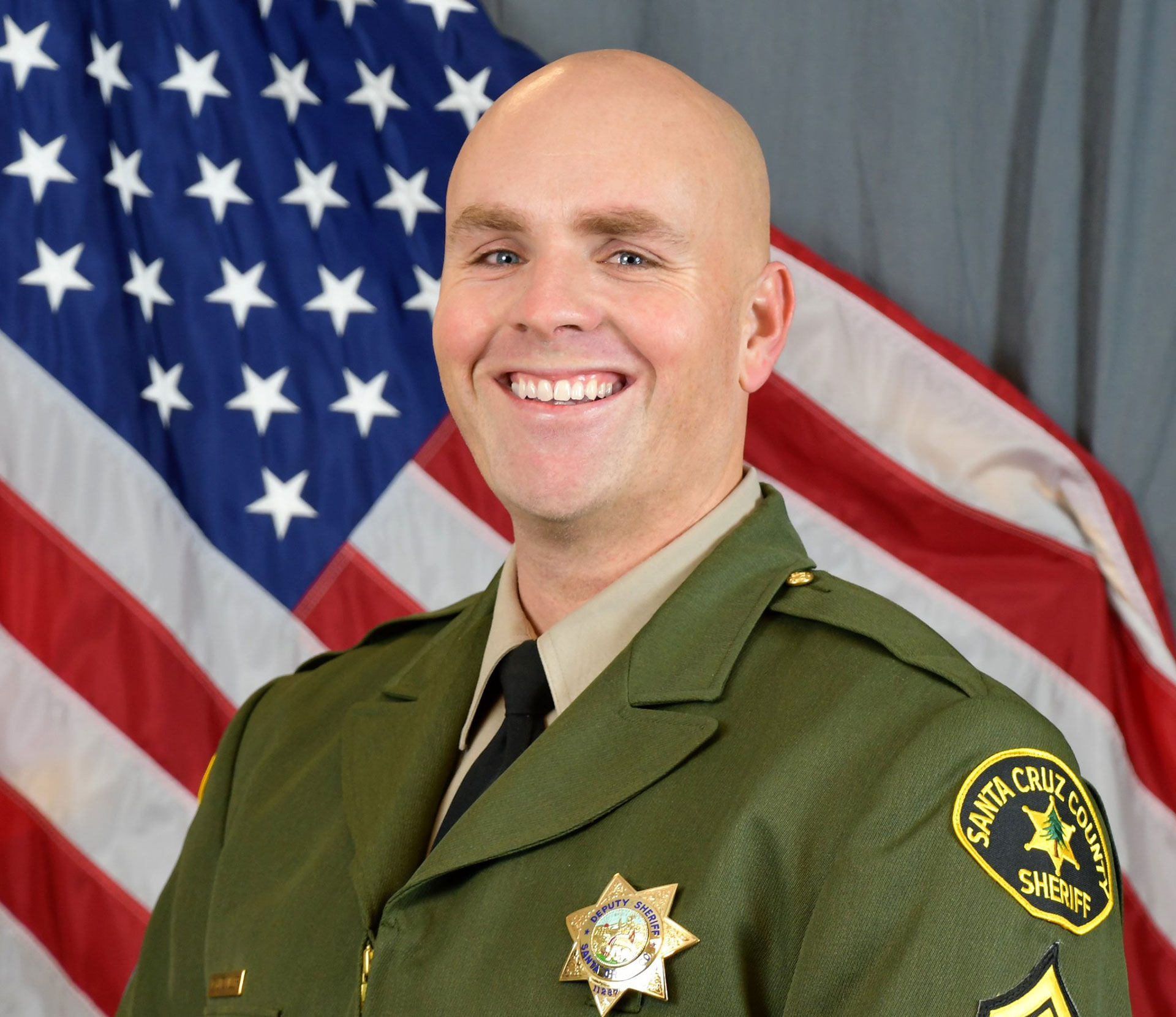
The Santa Cruz County Sheriff’s Office (SCCSO) in Northern California is employing the help of a “cop whisperer” to heal officers’ trauma and PTSD after several tragedies occurred in the department.
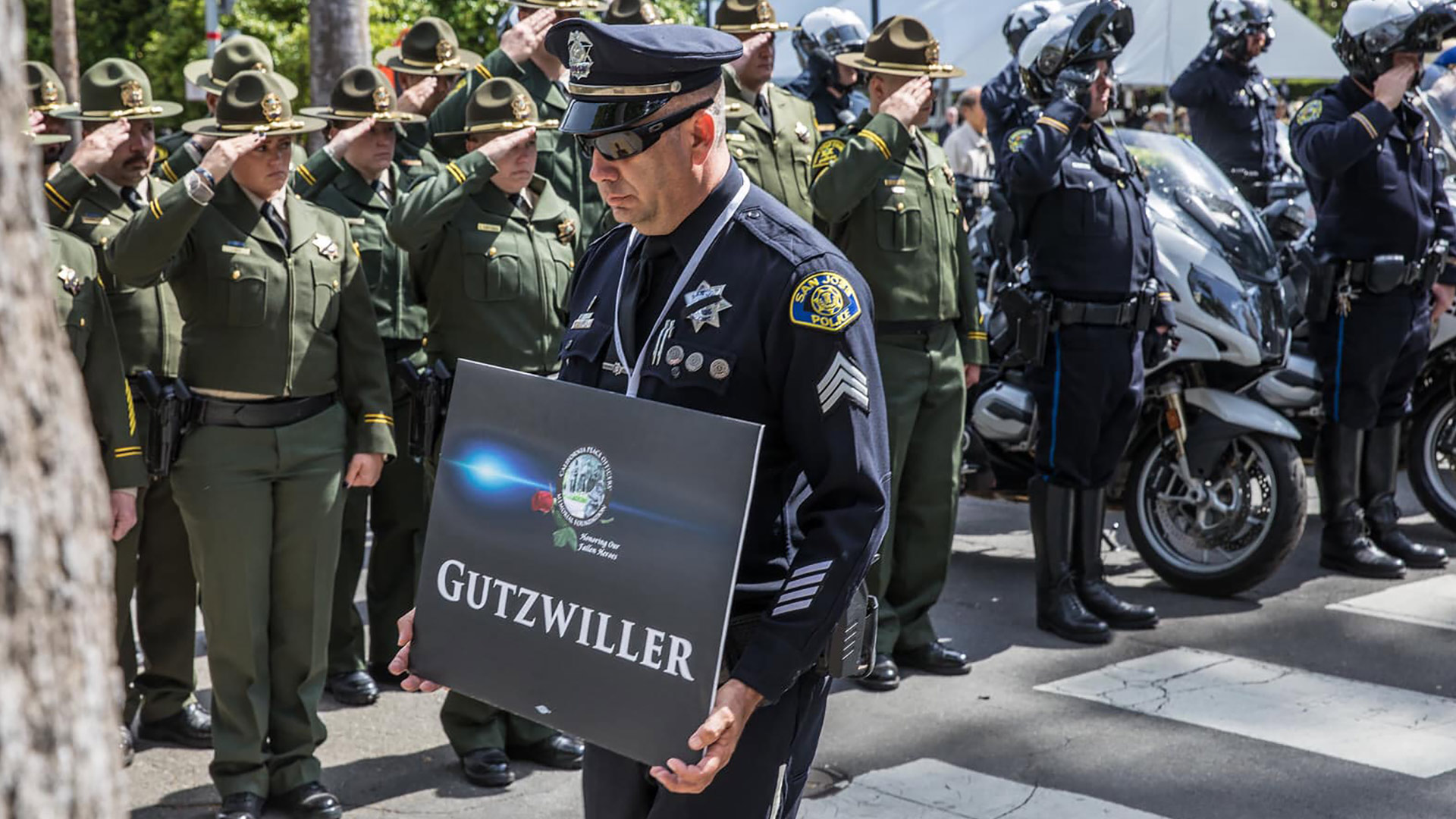
In 2013, Sergeant Loran “Butch” Baker and Detective Elizabeth Butler were shot and killed. More recently, in 2020, Sergeant Damon Gutzwiller was shot dead. Since then, the department has made several departmental and cultural changes to emphasize mental health awareness and alleviate psychological stress that officers face on the job.
Throughout these incidents, the department has also relied firmly on the assistance of counselor Karen Lansing, a locally based mental health guru.
Mike Pruger, a coroner detective at the time of the 2013 killings, is no stranger to the effects of PTSD. After seeing the dead bodies of two of his friends, Pruger had to be physically taken away from the crime scene. Soon after, he had to give the horrible news to Baker’s wife and son as they waited outside Dominican Hospital.
Fortunately, Pruger managed to heal himself without any special intervention, but he considers himself one of the lucky few.
Indeed, law enforcement officials point to data from a study by the Ruderman Family Foundation showing that police officers and firefighters are more likely to die by suicide than those in the average civilian population. Police departments are also negatively impacted by these tragedies, which can lead to mass resignations or low morale.
Scotts Valley mayor and Fallen Officer Foundation president Donna Lind said that shining a spotlight on the issue of trauma in law enforcement is key to overcoming the stigma involved.
“If someone sees something, tell someone — it may save a life,” Lind told Lookout Santa Cruz. Lind, a retired police officer herself, is an advocate for mental health. Her foundation raises money to support the families of fallen officers.
After the 2020 killing of Gutzwiller, the SCCSO saw Lansing’s “miracle working” firsthand.
On June 6, Officer Alex Spencer and Sergeant Gutzwiller were ambushed by active-duty military and militia member Steven Carrillo. Carrillo fatally shot Gutzwiller and nearly killed Spencer three times after shooting him in the chest, throwing an IED explosive at him and running him over several times.
Amazingly, Spencer survived with help from his bulletproof vest. Fortunately for him, the IED exploded in midair before it could reach him. Spencer also sustained multiple bone fractures from being run over, including his tibia, hip, ankle and ribs, as well as a punctured lung and swollen heart from being shot in the chest.
In addition to physical injuries, Spencer was acutely feeling the symptoms of PTSD. After noticing the signs, Pruger advised he get specialized help.
“I hadn’t noticed any real effects bubbling forth until I was back in it, processing it,” Spencer said in an interview with Lookout Santa Cruz. “There’s such sadness, first from the death of your friend. But then there’s also this visceral feeling when someone tries to kill you — and tries not once, not twice, but three times.”
Spencer credits his mental health rebound to Karen Lansing’s specialized treatment.
Lansing, a licensed marriage and family therapist trained in traumatic stress, was recruited to the department in 1995.
Lansing has a wide experience dealing with those who suffer trauma, traveling from Belfast working with Northern Ireland police officers, to Kosovo and the Middle East to heal “warrior brains” using a special technique called eye movement desensitization and reprocessing therapy (EMDR).
Throughout her career, Lansing has worked with military — such as Vietnam veterans — and law enforcement, as well as first responders like firefighters and paramedics.
In Spencer’s case, the “cop whisperer” worked with him for 32 hours over a period of nine months to help him recover mentally and find calm.
“I went from being in it to being like a drone above it. To this day, when I try to get into the details, I can get there. But it’s emotionless. It’s all kind of disconnected,” Spencer said.
According to Lansing, she spent 22 hours working with Spencer on “combined clinical and tactical range work, then another 10 hours of cross-checking, fine-tuning and the final assessment” to help him let go of the memory.
Spencer credited Lansing with keeping him on the force.
“Without it, I don’t think I would be doing law enforcement anymore — I’d probably have transitioned to another career,” he said. “I definitely wouldn’t be able to be the father and husband that I am today. I know that I would have been dealing with a lot more issues downstream.”
Santa Cruz officials hope that Lansing can improve retention and prevent more officers from turning in their badges.
Indeed, 16% of the department’s unionized officers left in 2021. Pruger believes that many left because of mental health struggles arising from the Gutzwiller murder.
He pointed to the fact that after the 2013 cop killings, the department also lost a similar number of personnel.
Santa Cruz Police Department Chief Bernie Escalante added that two of his officers who killed the assailant that day left the job soon after.
“I think our organization, and others, have become smart enough to recognize that we can’t afford to continually lose good people, good deputies, before their time because we don’t understand what they’re going through,” Pruger said, referring to the psychological recovery undergone by Spencer and Deputy Emma Ramponi (who was also there that day).
Santa Cruz County Sheriff Jim Hart says the stigma surrounding mental health is starting to go away.
“The culture and mindset has shifted in a positive direction,” Hart said. “It wasn’t really an acknowledged or accepted thing to go get help when I started — or even 15, 20 years ago. Now we encourage people to get help.”
After the 2020 incident, the SCCSO began offering 24/7 counseling services to anyone, as well as treatment with Lansing, in an effort to improve officer retention and satisfaction.
Spencer is also encouraging fellow officers to seek help if needed.
“Once you’re healed, you feel really empowered to pass that along,” Spencer said.
[ad_2]
