
[ad_1]
Investigations continue into exactly why and how the tragedy unfolded
Cars crashed from the bridge to the river below, and six lives were lost. Here’s a summary of what happened and what the survivors of the deceased workers might be able to claim in benefits or from a lawsuit.
You might have heard about the recent collapse of the Francis Scott Key Bridge in Baltimore. Though tragic and sad for the individuals and families affected, it could have been an even bigger tragedy if it had happened during the day or if crews had not managed to stop the cars about to cross the bridge before the collision.
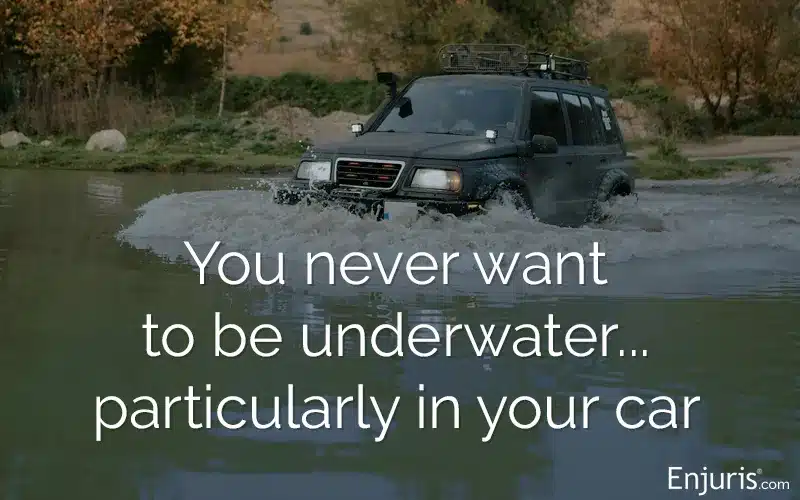
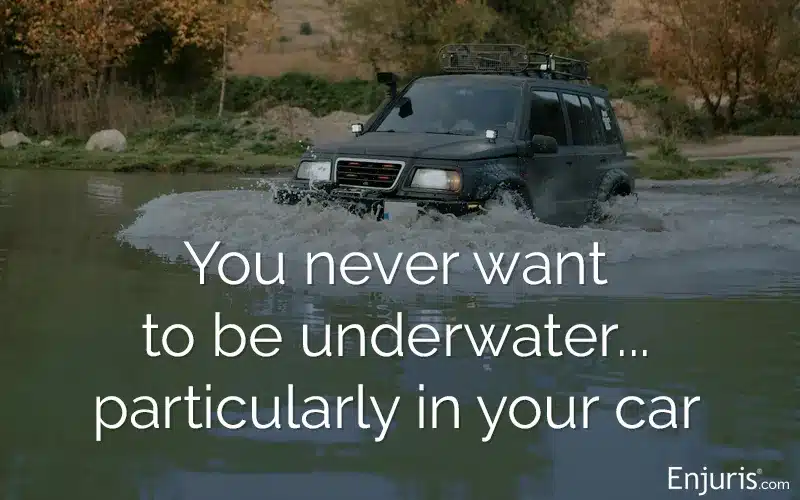
But in the wake of this accident, some people are left wondering what they would do if their car suddenly plunged into a body of water. No one expects to be in this situation, ever. A large bridge collapse like what happened in Maryland is highly unusual, but there are other situations when you might find yourself unexpectedly underwater in your vehicle.
We’ll talk about how to escape if your vehicle becomes submerged and who might face liability for a tragic accident like the Key Bridge.
What to do if your vehicle becomes submerged
University of Manitoba thermal physiologist professor Gordon Giesbrecht says if hypothermia is a factor, an occupant has one minute to escape a sinking vehicle. Even if the car becomes partially submerged, the person’s likelihood of survival becomes very slim.
He encourages drivers to memorize this: SWOC.
| Seat belts | Off |
| Windows | Open |
| Out | Immediately |
| Children | First |
An electric window should still operate for about the first minute because the ignition was on, but it’s important to open the window and not the door because once water gets up against the window, you won’t even be able to open that.
It’s easier to push a person out of a car than to pull from the outside, so if you have children with you, push the oldest first, then the youngest. Similarly, if there are several adults, first “free” the person who is most capable of helping others on the outside.
You can also gain a little extra time by escaping from the rear windows because cars will sink nose first. If you have an easily accessible rear hatch, it’s best to let the front of the vehicle sink, make your way toward the rear, and exit through the hatch.
Should you try to “bust” through the glass with a tool if your vehicle is submerged?
Giesbrecht says no. Most car windows are resistant to hard force, which means it won’t be easy to smash a window as an escape route, even if you have a tool handy. There’s a small label on the bottom of your side window that could tell you if the windows are laminated or tempered glass; a laminated window is unlikely to break. However, this information only helps you if you’ve learned it before the car becomes submerged.
Besides, if you only have one minute to escape, searching your car for a good tool to smash a window isn’t a good use of that time.
If the vehicle is floating, you should try to hang on as long as possible and use it as a raft until you can find another object to support you. Drowning is a concern for anyone who can’t swim, is panicking, or goes into shock. Shock could happen if the water is very cold because of gasping and hyperventilating. The cold could incapacitate your muscles and nerves, which would leave you unable to swim.
Getting to shore after escaping a submerged vehicle
Certainly, your next priority after leaving the vehicle is to reach shore or some other location where you can be on dry land and can be found and rescued. If the distance is too far to swim, look for floating debris or any object that you could use for buoyancy. Or, if you’re in a river or body of water where passersby might be able to see you, try to wave a piece of clothing or item that would make you more visible.
Chances are that a search-and-rescue team is on the way, and you want to do whatever you can to help them find you.
Liability for bridge collapses or similar accidents
Thankfully, the Key Bridge collapse was during the night when there were few cars crossing, and officials received word that the barge was about to hit, so they prevented some vehicles from entering the bridge.
However, that’s likely little consolation to the families of the six people who died. The individuals who are presumed dead after the cargo ship crashed into the bridge were construction workers and their families will likely be eligible for workers’ compensation survivor benefits.
In a situation like this, though, it’s possible that if a party that is not the individuals’ employer is found liable for the accident, then their families might file a third-party wrongful death lawsuit against the negligent party (or parties).
When can you file a third-party lawsuit instead of a workers’ compensation claim?
A workers’ compensation claim offers a lot of benefit (aside from the financial) to an injured worker. First, it’s no-fault benefit, which means that the injured claimant does not need to prove that the employer’s negligence caused the injury. Second, it’s usually a faster process than a lawsuit and the claimant can receive benefits quickly to cover their medical expenses. Third, it saves money in court fees, prevents a public proceeding, and can be more time-efficient for all parties involved.
But there are specific benefits covered under workers’ compensation. It covers medical expenses, a percentage of the worker’s lost wages, and survivor benefits. It does not cover things like emotional distress, pain and suffering, loss of consortium for family members, and punitive damages.
Workers’ compensation is an exclusive remedy, though, which means an injured worker cannot choose to file a lawsuit instead of accepting workers’ comp benefits if they are eligible.
But, if the worker is injured or killed because of another person or entity’s negligence (i.e. not their employer), then they can file a third-party lawsuit.
In the instance of the Key Bridge disaster, the investigation is ongoing. Officials don’t know yet who could be liable—it could be the agency that maintains the bridge, a construction contractor, the owner or operator of the freight barge that hit it, or someone else entirely. Once we know more about why the barge lost control and why the bridge could not withstand the impact, this will become clearer. At that time, there could be lawsuits filed against liable defendants.
For now, the families of those lost will need to seek guidance from their lawyers for how to proceed.
[ad_2]